The Yardage Book: Leadership Reflections

Every month, our Executive Director shares personal reflections on the work we do and the impact we witness at First Tee — Metro Atlanta. These letters offer an inside look at how we are building mental health and emotional resilience through golf—not just the outcomes we celebrate, but the moments that shape us, the lessons we’re learning alongside young people, and the coaches who show up every day to create spaces where belonging is possible.

Like a caddie’s yardage book that maps the course with careful observations and insights gained from being close to the game, these letters document what we are seeing on the ground, what we are building together, and where we are headed as an organization. They are honest, reflective, and rooted in the belief that leadership means bearing witness to the work and sharing what that work teaches us.

Each letter explores a different aspect of youth development, mental health, and the
power of community—always through the lens of real experience, real stories, and real
impact.

If you are a major supporter of First Tee — Metro Atlanta, you receive The Yardage Book directly in your inbox each month. These letters are shared here on our website after initial distribution as a window into the heart of our mission and an invitation to understand the deeper work happening on our courses and in our community.

This isn’t just about golf. It’s about what golf makes possible.


I wasn’t a golfer when I started working at First Tee — Metro Atlanta.

That probably sounds strange coming from someone who’d worked with the PGA TOUR and the AJGA. I’d been around the game at the highest level. I understood golf. I could talk about it, organize around it, appreciate it.

But playing it myself? That was different. I didn’t grow up with a club in my hand. I wasn’t the guy who could step onto the course and play. Golf was the thing I worked in, not the thing I did.

But then one day in 2014, early in my time here as Program Director, one of our coaches put me on the spot.

His name was William “Junebug” Lewis. GSGA Hall of Famer. Legend in the Atlanta golf community. One of the most respected coaches we’ve ever had. And he was teaching a class when he turned to me and said, in front of all the kids: “Jenae, come hit a shot.”

I knew what was going to happen. I was going to shank it. The kids were going to see that I had no idea what I was doing. And they were going to look at me differently. They were going to wonder why someone who couldn’t even hit a golf ball was supposed to be leading this program.

I stepped up. I swung. And sure enough, I hit a duck hook. The ball curved hard left, nowhere near where I was aiming.

And then a little boy shouted: “OHHH WEEE, he hit it far!”

Not “that was terrible.” Not “you missed.” Just pure excitement that I’d made solid contact and the ball had gone somewhere.

Coach Lewis looked at me and said something I’ve never forgotten: “They don’t know that you don’t know. They see that you can actually get the ball in the air and that is good enough for them.”

That moment changed something in me.


Here’s what I realized: I wasn’t bad at golf. I was just holding myself to the wrong standard.

So I started practicing. I’d eat lunch at my desk so I could spend my break on the range hitting balls, trying to figure it out. I’d stay after work to play a few holes, which meant longer days, less time at home, more repetition when nobody was watching.

And for a long time, nothing felt different. I was still hitting duck hooks. Still inconsistent. Still the guy who worked at a golf nonprofit but couldn’t really play.

Until one day, I went out to play with some of our older participants. These were kids who knew I wasn’t a golfer. They’d been ribbing me about it for months, in that good-natured way teenagers do when they know you can take it.

But that day, after we finished, a few of them came up to me and said: “We’re impressed. You’ve gotten really good.”

And that’s when I realized: I had. Somewhere between the lunch breaks on the range and the evenings staying late and all those duck hooks nobody saw, I’d actually learned how to play. I started keeping a handicap after that. Eventually got down to an 11.

Not because I suddenly believed I could. But because I was willing to be bad at something in front of people until I wasn’t anymore.


This is what we mean when we talk about growth mindset.

Not the inspirational poster version. Not “you can do anything if you just believe.” The real version. The one that requires you to fail, publicly, repeatedly, and keep showing up anyway.

The version that says: the person you are today isn’t the person you have to be tomorrow. But the distance between those two versions is filled with work nobody sees and moments when you want to quit.

Our Spring session started at the beginning of this month. New participants walked onto the range for the first time. Returning participants came back, ready to try again.

And every single one of them is about to have their own version of that moment. Their own duck hook. Their own “OHHH WEEE, he hit it far” from someone who sees progress they can’t see yet. Their own season of showing up when nobody’s watching. Their own moment when someone says “wait, you’ve gotten really good at this.”

That’s the work we do here. We create space where growth mindset isn’t just taught, it’s lived. Where kids get to be bad at something and stay anyway. Where coaches model what it looks like to still be learning. Where the standard isn’t perfection, it’s progress.

And where someone is always there to shout “OHHH WEEE” when you make contact, even if the ball doesn’t go straight.


So here’s what I want to ask you this month:

What’s something you’re still learning? Not something you’ve mastered. Something you’re actively bad at, or uncertain about, or working through.

And who’s been your version of that little boy? Who’s seen progress in you that you couldn’t see in yourself yet?

Because here’s what I’m learning: growth doesn’t happen when we already know how. It happens when we’re willing to not know, in front of people, and trust that we’ll figure it out.

And if I’m being honest? I’m still good for a duck hook here and there. But I keep working at it. That’s what growth mindset actually looks like.

Your support of First Tee — Metro Atlanta creates the space where that kind of growth is possible. Where participants and coaches and yes, even Executive Directors, get to become people they didn’t think they could be.

This Spring, we’re watching it happen all over again. Shot by shot. Day by day. Duck hook by duck hook.

And I’m grateful you’re part of making that possible.

With gratitude, 

Jenae


I’ve been thinking about phone calls lately. The ones we almost don’t make. The ones where we rehearse what we’ll say, hoping it’ll be quick, hoping we won’t need to say too much.

Last month, I got one of those calls.

It was from someone who went through our program years ago. He’s a coach with us now. The kind of person who shows up early, remembers every kid’s name, brings energy even on cold mornings. From the outside, he has it together.

He called because he was going through a breakup. That’s how it started, anyway. What he thought would be a quick conversation (maybe ten minutes of me telling him it would be okay) turned into two and a half hours.

And somewhere in that conversation, it stopped being about heartbreak and became about something deeper. About being left behind by the people who were supposed to stay. About opening yourself up for the first time and getting hurt. About those quiet moments when the weight gets heavy and you wonder if anyone would notice if you just stopped trying.

I told him what I saw: that he has this glow about him. That the kids light up when he’s around. That his presence matters more than he knows.

And then I did something I don’t do often. I told him about my twenties.

Not the version of my twenties that looks good in retrospect. The real version. The part where I didn’t have it figured out. Where I was struggling to hold everything together and pretending I wasn’t. Where I felt like I was supposed to have answers I didn’t have.

I told him: the version of me you know now? The one who runs this organization, who seems like they have it together? That person didn’t exist then. And honestly, some days that person still doesn’t exist.

But here’s what I learned: you don’t get through the hard holes by playing the whole round at once. You take it shot by shot. Moment by moment. And when you look back at the scorecard later, you realize the rough patches don’t define the round. They’re just part of it.

By the end of the call, something had shifted. Not his circumstances (the heartbreak was still real, the old wounds were still there). But his permission to keep going felt more solid. And mine did too.


Here’s the thing about asking for help: we convince ourselves it’s a burden.

I know because I just learned this lesson myself.

Recently, I was working through a significant decision for the organization. It was complex, involved multiple moving parts, and I genuinely thought the right thing to do was figure it out on my own and then present the solution to our Board.

That’s what leadership looks like, right? Having the answers. Not burdening volunteers with the messy middle. Bringing them solutions, not problems.

Except our Board leadership pulled me aside and said something I wasn’t expecting: “Help is available to you. You don’t have to carry this alone.”

Their leadership experience let them see questions I hadn’t thought to ask myself. They could see that I was trying to protect them from the weight of the decision when what I actually needed was their wisdom in the middle of it.

And when they offered that, something released in me. Not because they made the decision easier, but because they reminded me: we all need each other. Even (especially) the person who’s supposed to have it figured out.


This is the work we do at First Tee — Metro Atlanta.

We’re teaching young people that asking for help isn’t weakness. It’s wisdom.

That the strongest thing you can do when you’re in a rough patch isn’t to push through alone. It’s to call someone and say: I need help. I’m not okay right now. Can you walk with me through this?

Our coaches create space for those conversations. They model what it looks like to struggle and still belong. To not have all the answers and still be worthy of support. To take things shot by shot instead of carrying the weight of the entire round.

And when a young person who went through our program years ago picks up the phone (not because everything is falling apart, but because he trusts that someone will be on the other end) that’s when I know this work is bigger than golf.


So here’s what I want to ask you this month:

When was the last time you asked for help? Really asked, not the polite “could you grab that for me” kind of asking, but the vulnerable “I can’t do this alone” kind?

And who answered?

Because here’s what I’m learning: the people who show up when we ask aren’t burdened by it. They’re honored. They’re reminded that they matter. That their experience, their wisdom, their presence makes a difference.

Your support of First Tee — Metro Atlanta creates a community where help-seeking isn’t just allowed, it’s modeled. Where young people see adults who don’t have it all figured out but who keep showing up anyway. Where asking for help is understood not as failure, but as the courage to keep writing your story.

This month, I’m grateful you’re part of the community that makes those phone calls possible. That creates space for two-and-a-half-hour conversations. That reminds young people (and reminds me) that we don’t have to carry it all alone.

Shot by shot. Together.

With gratitude,


Jenae Jenkins

Happy New Year! I hope 2026 is off to a meaningful start for you and yours. I’m grateful to begin this year in conversation with you, and deeply thankful for your investment in our work in 2025. As promised, I’m launching a monthly series where I’ll share more about our mental health work at First Tee — Metro Atlanta. This is the first of twelve letters, and I’m starting with something personal.

I’ve been thinking about what we ask of ourselves in January. We’re supposed to feel motivated, optimistic, ready to become someone new. But for many of us, and especially for young people, this season doesn’t bring inspiration. It brings pressure. Pressure to have it figured out. To start fresh. To transform overnight. To finally become the version of ourselves we think we’re supposed to be.

But here’s what I’ve learned: when you’re standing in a moment that requires you to start over, it often doesn’t feel like possibility. When you’re living it, it can feel like endings, like losing what you had, not gaining what’s next. That’s why I’m starting here.

In December, I told you I’d share more this year about our mental health work, about how we’re strengthening emotional resilience through golf, about the moments that shape how I lead this organization. This is the first of twelve conversations we’ll have in 2026. Each month, I’ll pull back the curtain on a different part of this work.

And in January, when the noise about new beginnings is loudest, I want to share something personal about what real starting over actually requires.

I was a senior in high school when I found out my girlfriend was pregnant. College felt impossible. My future felt like it was closing before it ever opened. The statistics about teen parenthood were clear: things were going to hard and more than likely, I wasn’t going to make it.

I told my parents, who were heartbroken. And then I had to face my girlfriend’s mother. I expected anger. Disappointment. A door slammed shut. Instead, she said: “While I am disappointed, Jenae, don’t let this make you decide not to go to college. I believe in you.” 

Here’s what changed in that moment: not my circumstances, but my permission to belong. 

I was still going to be a teen parent. College was still going to be hard. None of the external realities shifted. But something internal did. She told me I belonged in my next chapter. That I wasn’t disqualified. That the future I’d imagined wasn’t gone, it was just going to look different. She gave me permission to keep going when everything in me wanted to quit and give up on the goals I had always had. And that became the foundation I stood on when nothing else felt stable. 

Every day at First Tee — Metro Atlanta, I meet young people standing in their own version of that moment. 

They’re already surrounded by noise. Social media showing them everyone else’s highlight reels, a culture that celebrates overnight success while hiding the years of struggle behind it, pressure to have everything figured out right now when most adults know that life is full of pivots we never saw coming. They’re measuring themselves against the 5% while living in the reality of the 95%. And in January, that gap feels even wider. 

What they need is what I needed: someone who sees them in their struggle and still believes they belong in what comes next. 

That’s the mental health work we do here. With coaches who understand that young people need space to struggle without shame, to make mistakes without being defined by them. 

Our coaches ask questions like “What do you need right now to feel like you can keep going?” They create moments where a young person can say “I’m not good at this yet” and hear back “You belong here anyway. Especially on the hard days.” Where starting over isn’t a sign that something’s wrong, it’s proof that you’re still in the game. Where the message underneath everything is: You belong here. You can begin again. We believe in you. 

Here’s what I’ve learned about new beginnings: you need to believe change is possible. But just as importantly, you need someone who believes you belong in that change. 

Not someone who has all the answers. Not someone who makes it easy. Someone who sees you in the middle of it and says: you still belong here. 

So as we step into this new year together, I want to ask: Who gave you that when you needed it most? Who believed you belonged in your next chapter even when you weren’t sure yourself? 

And the bigger question: How can we be that for the next generation? 

Your support of First Tee — Metro Atlanta makes you part of the community that gives young people permission to belong. This year, I’m inviting you to see even more of how that support translates into real change.

Every month, I’ll share more. For now, I want you to know: the work you support isn’t just about golf. It’s about giving young people permission to keep writing their own stories.

Jenae Jenkins
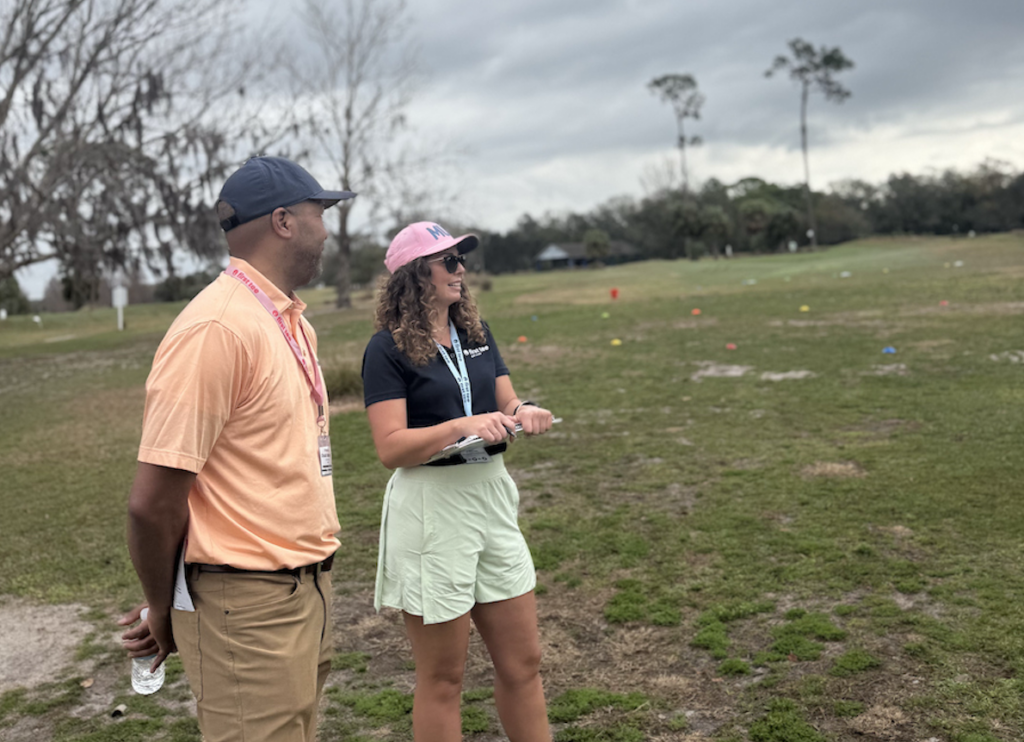
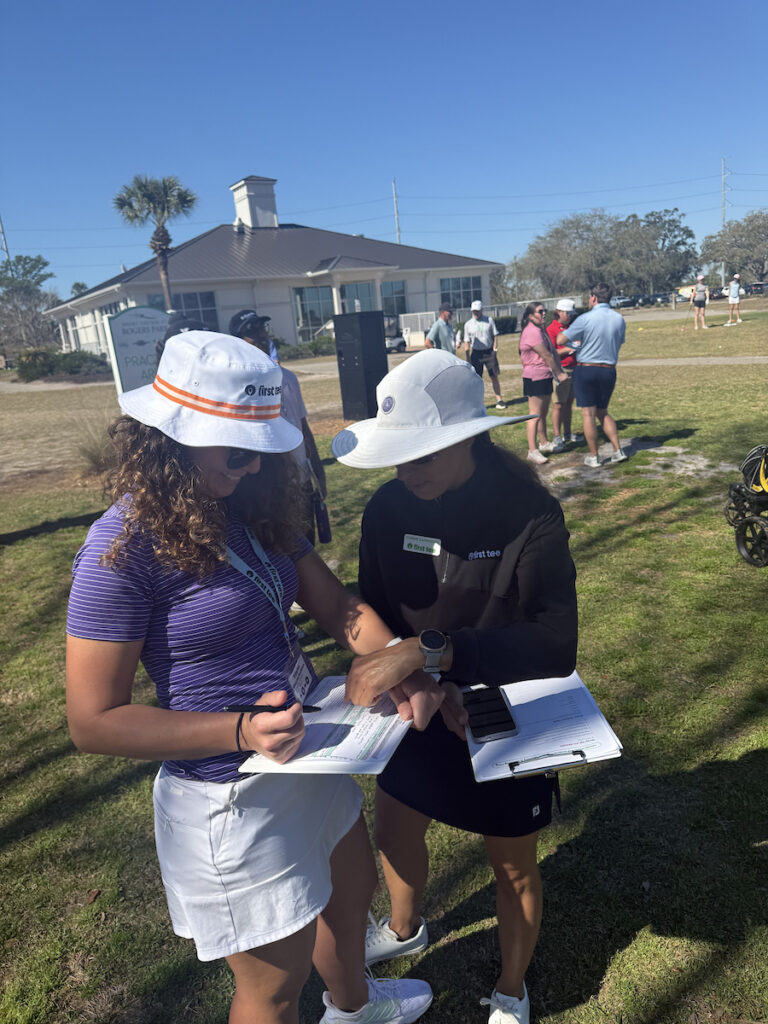
Coach Shayna: First Tee coaches are ‘building the future of the game and the character of the kids who will carry it forward’

Some people find golf. Golf found Coach Shayna before she could even see over the top of the flagstick. Growing up in Unionville, Missouri, Shayna was just 3 when her grandparents cut down a putter and packed her into their three-wheel Harley-Davidson golf cart, heading to their nine-hole course with sand greens.

“My grandparents were intentional about teaching me the game the right way,” she said. “They made sure I understood both the mechanics and the integrity behind golf.”

By 11, Coach Shayna was playing on real grass greens for the first time. By 13, she shot a 79 at the Timber Ridge Junior Golf Tournament in Memphis, Missouri — the best score of the day — with her Grandpa Gary, affectionately known as “Schoonie,” walking every hole beside her.

Blazing her own trail

Golf wasn’t always easy to access, especially for a girl growing up in rural America in that era. There were no First Tee programs nearby, no girls’ golf team at her school and no shortage of moments that tested her resolve. When she was excluded from a Father’s Day tournament because organizers believed there should be “no girls,” she didn’t walk away from the game. She found another way in.

Shayna earned a spot on her high school boys’ varsity golf team — and held her own in the top five all four years, competing weekly for the number one position. Golf was just one chapter in a standout athletic career that earned her 16 varsity letters across golf, softball, basketball and track. Her softball team was later inducted into the Missouri State Hall of Fame.

Finding her way back to golf

Coach Shayna stuck with softball through college, where she earned a degree in psychology before becoming a cosmetologist. Golf took a backseat as she moved to Florida and became a mom of five, but the love of the game never left.

“For years, I mostly daydreamed about it and occasionally hit balls in the yard,” she said. “But the desire to compete and be part of the golf community never left me.”

When Shayna began working with Dixon Golf, a tournament consulting company, the golf world started pulling her back in. The more she played, the more one organization kept coming to mind: First Tee.

“I knew firsthand how transformative starting young in golf could be,” she said.

About three years ago, she met First Tee – Gulf Coast executive director Marty Stanovich and signed on as a volunteer. In the fall of 2025, she achieved her goal of becoming head coach at Fort Walton Beach Golf Club.

The joy of coaching

Coach Shayna’s background is uniquely suited for the work. Her degree in developmental psychology, combined with raising five kids of her own, gives her a nuanced lens when working with young people.

“I know they are constantly growing,” she said. “They are resilient, perceptive and capable of more than they realize.”

With support from First Tee partner, Morgan Stanley, Coach Shayna recently reached another milestone – she attended First Tee’s Level 2 coach training in Tampa, where she learned more about the youth development organization’s Coach Philosophy.

“Being surrounded by others who care deeply about youth development and the game itself was energizing,” she said. “Learning together reinforced that coaching doesn’t have to be done alone.”

A message to future coaches

“My favorite part of coaching is all of it,” Coach Shayna said. “I love showing up, maximizing our time and creating an environment that is both fun and challenging. I see kids as intelligent, capable and full of possibility. My goal is to draw that potential out of them and empower them.”

For anyone on the fence about getting involved with First Tee, her advice is direct: Don’t wait.

It’s rewarding to impact not only children, but the broader community, she said. Almost every class, an older club member stops her or another First Tee coach to thank them for introducing the next generation to the sport they love.

“And that is what First Tee is really about — building the future of the game and the character of the kids who will carry it forward,” she said.

First Tee coaches shape character, build confidence and create supportive environments where every participant feels inspired to grow.

In collaboration with The Harris Poll, our research shows parents believe trained coaches are better equipped to teach new skills, demonstrate a dedication to safety and adapt to the needs of individual children.

Morgan Stanley donates $5,000 for each Eagle recorded at THE PLAYERS Championship to support First Tee’s coach training efforts. Over the last five years, First Tee has been able to send hundreds of coaches to valuable, in-person trainings, where they learn to teach golf and serve as crucial mentors for the next generation.

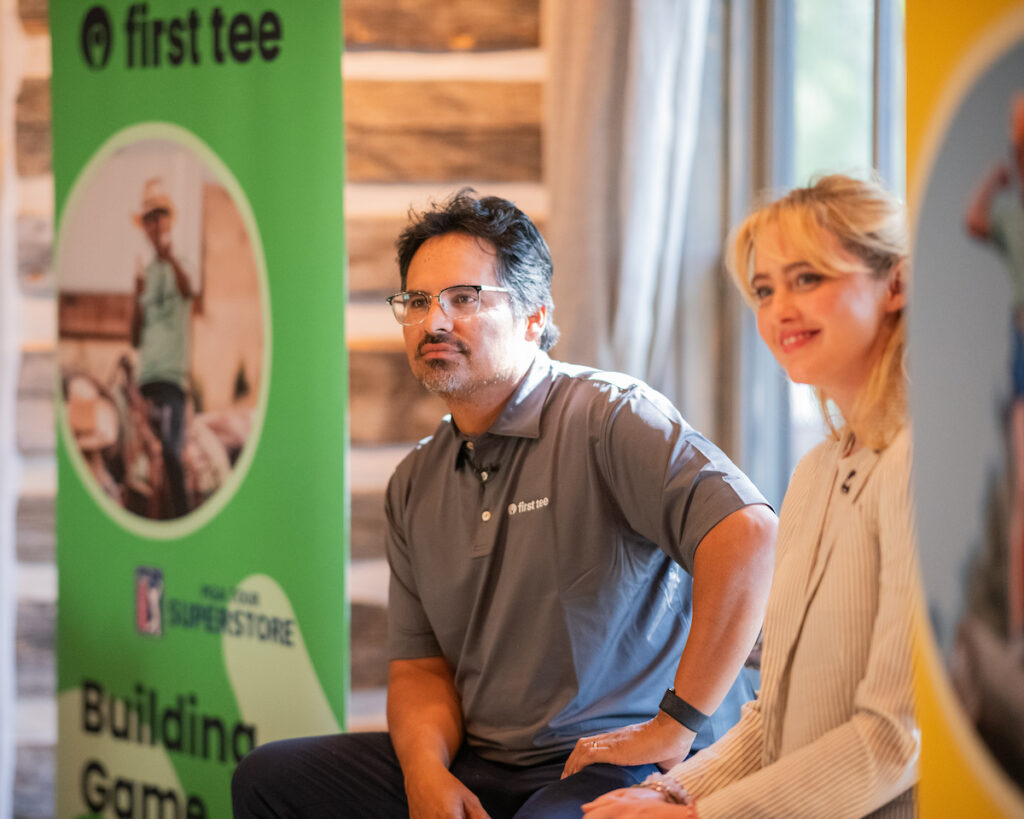
Actor, avid golfer Michael Peña joins First Tee as Brand Ambassador

Peña will support First Tee’s efforts to bring its game-changing golf and life skills curriculum to young people from all backgrounds

PONTE VEDRA BEACH, Fla. (Feb. 20, 2026) – Youth development organization First Tee is proud to announce that actor Michael Peña has joined the organization as a Brand Ambassador. As a longtime golfer, Peña is enthusiastic about bringing the sport and its inherent values to families across the globe. 

Known for roles in films and television series including “Ant-Man,” “A Million Miles Away” and the recent hit series, “All Her Fault,” Peña has been a dedicated supporter of First Tee since 2023, when he first attended the organization’s annual Leadership Summit as a guest speaker. The Summit brings together teen participants from First Tee chapters across the country for leadership development, networking and golf. 

As a Brand Ambassador, Peña will support First Tee’s efforts to reach kids from all communities with programming that uses golf as a vehicle to help young people build inner strength, self-confidence and resilience. Through First Tee’s network of 150 chapters, the organization serves young people ages 5-18 with programs that extend beyond the golf course and into participants’ homes, schools and communities. First Tee also offers robust scholarship and alumni programs

An accomplished golfer himself, Peña regularly competes in pro-am events and has witnessed firsthand how the game can positively impact its players. 

“Golf has been an important part of my life, teaching me patience, discipline and how to handle both success and failure,” Peña said. “I’m honored to become a Brand Ambassador and help First Tee reach even more young people with programs that will help them succeed on the golf course and beyond.” 

“Michael’s genuine passion for golf and his commitment to empowering young people make him an ideal Brand Ambassador as we work to reach more kids with our life-changing programs,” said First Tee CEO Greg McLaughlin. “Michael has inspired teens at our Leadership Summit with his authenticity and his message about the power of perseverance. We are grateful he is taking his valuable time and energy to support First Tee.”  

First Tee reaches more than 3 million young people annually through programming at chapters, schools and community centers. Peña joins three existing First Tee Brand Ambassadors: Actress and First Tee alumna Kathryn Newton and PGA TOUR players Alex Smalley and Austin Smotherman, who is also a First Tee alumnus. 

First Tee’s 2026 national events connect teens with mentors, experiences that shape their futures

Signature programs bring young people face-to-face with business leaders, professional athletes and life-changing opportunities

PONTE VEDRA BEACH, Fla. (Jan. 26, 2026) – First Tee is pleased to announce its 2026 lineup of national participant events, offering teens powerful opportunities to grow as leaders, athletes and changemakers. Through partnerships with leading companies, organizations and generous individuals, First Tee provides experiences that challenge young people to step outside their comfort zones and discover their potential in supportive environments.

These national events are part of First Tee’s broader commitment to keeping teens actively engaged during the critical adolescent years, a need underscored by research from First Tee and The Harris Poll showing that nearly 90% of parents believe character development deserves greater emphasis in today’s society. Through First Tee’s Ace capstone program, junior coach opportunities and immersive national events, First Tee builds essential life skills and creates lasting mentor connections that help teens navigate this pivotal stage of development.

2026 Participant Events include:

Leadership Series (March 2026): In partnership with PGA TOUR Superstore, this five-week program guides participants through discovering their unique leadership values and strengths. It is held at PGA TOUR Superstore locations across the country.

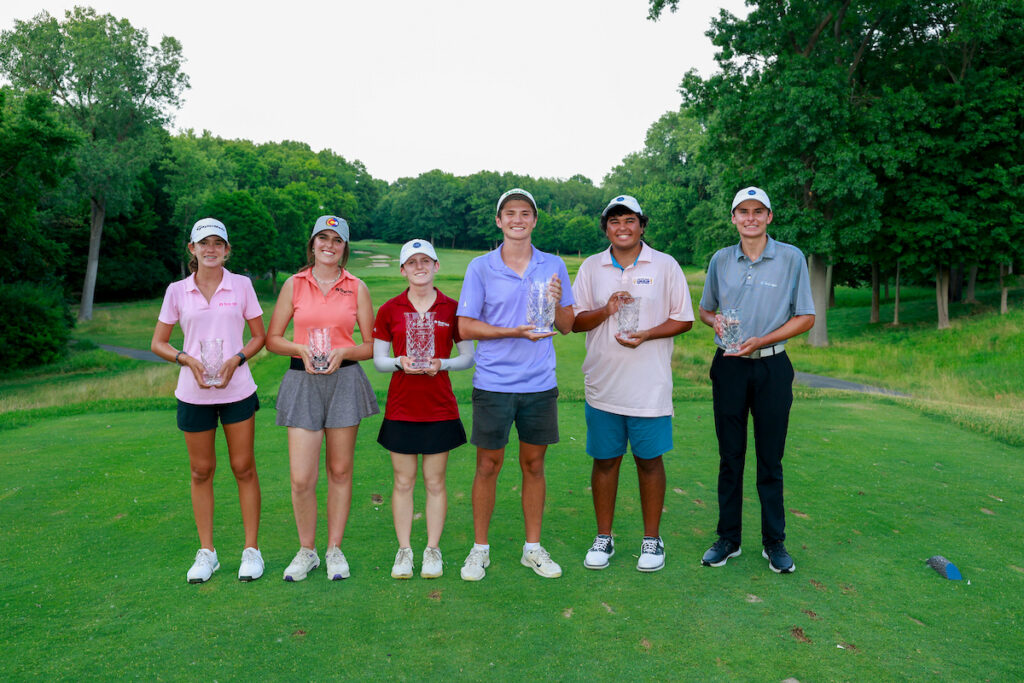
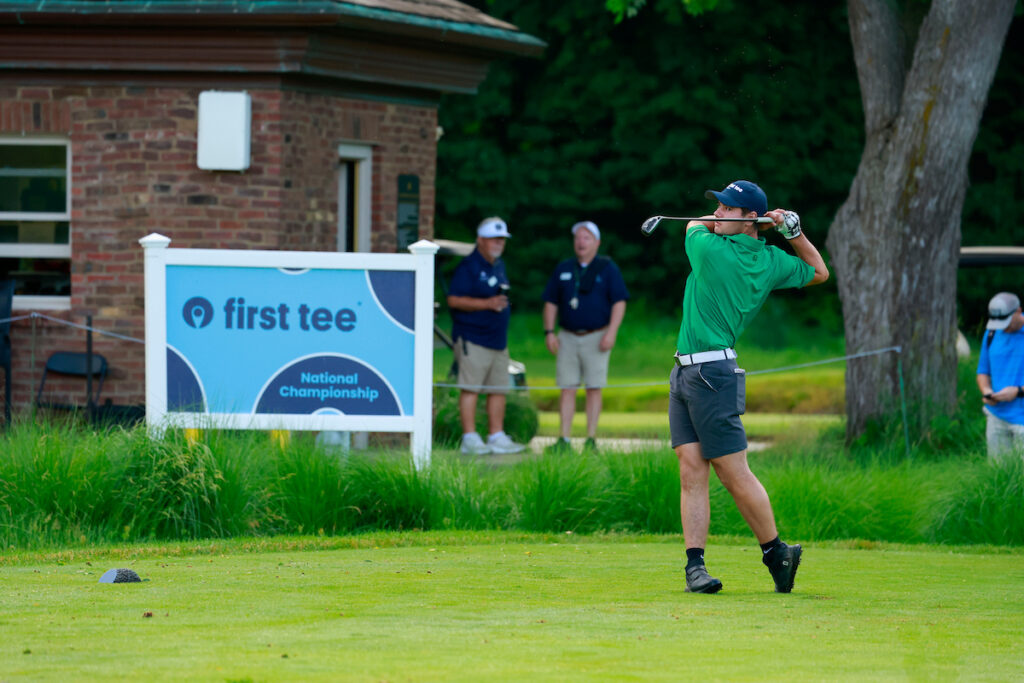
National Championship (June 21-25, 2026): The University of North Carolina’s Finley Golf Club will host First Tee’s top high school golfers as they demonstrate their character and competitive skills developed through the program.

Game Changers Academy (July 18-22, 2026): Now in its 26th year, this signature event returns to Minneapolis, challenging teens to celebrate their unique perspectives and create positive change in their communities.

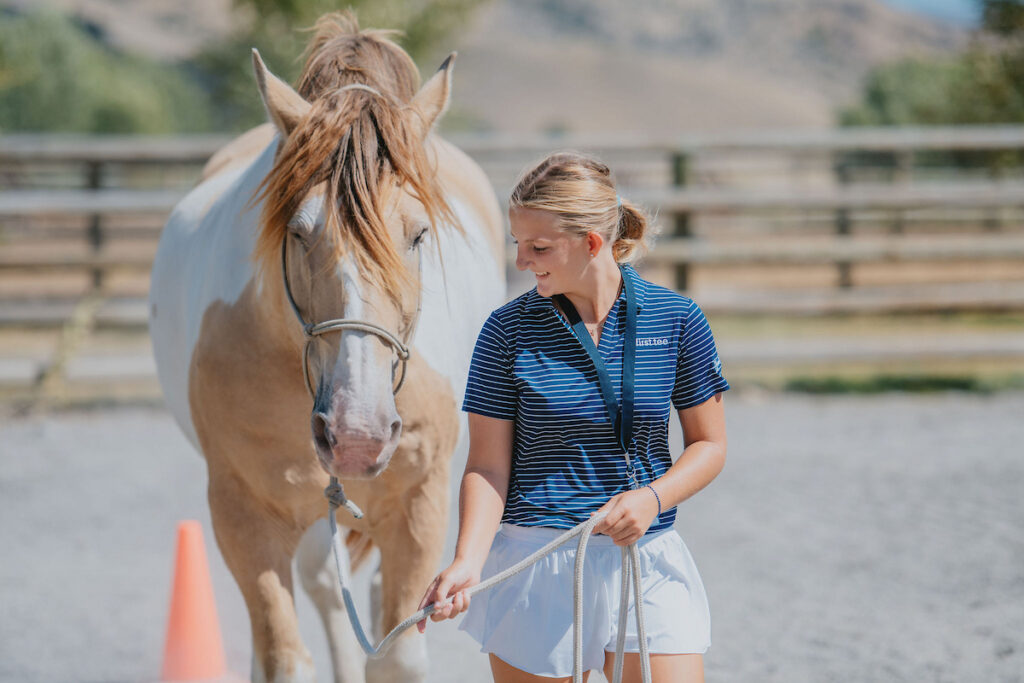
Leadership Summit (Aug. 3-7 and 10-14, 2026): Leadership Series graduates can apply for this adventure-based learning experience at West Creek Ranch in Montana, where PGA TOUR Superstore executives mentor participants through activities like horseback riding and whitewater rafting, designed to strengthen their leadership capabilities.

PURE Insurance Championship (September 15-20, 2026): At the iconic Pebble Beach Golf Links, teens compete alongside PGA TOUR Champions players and connect with business leaders in an event broadcast on Golf Channel, blending elite golf with career mentorship.

Drive Your Future Academy (Oct. 8-12, 2026): In partnership with John Deere, this event brings young women to Ponte Vedra Beach, Florida, to connect with accomplished female mentors from John Deere and other leading organizations and explore pathways for continued involvement in golf and leadership beyond high school.

Innovators Forum (Nov. 15-19, 2026): Participants collaborate with seasoned business and nonprofit leaders in Amelia Island, Florida, to design and launch community service initiatives that make a difference in their hometowns.

First Tee participant events provide opportunities for teens to pursue their interests, expand their horizons and grow as people. For some, these events represent their first time on an airplane, visiting a college campus or traveling on their own. This freedom gives teens the opportunity to use good judgment, grow through challenge and build positive self-identity.

“These events represent some of the most meaningful moments in our participants’ First Tee journey,” said First Tee CEO Greg McLaughlin. “We consistently hear from teens, parents and coaches that these experiences help crystallize what is possible for their futures. We are deeply grateful to AWS, John Deere, PGA TOUR Superstore, PURE Insurance, Topgolf and countless individual supporters who invest in these life-changing opportunities.”

First Tee’s national participant events serve more than 300 teens annually. Interested teens and parents should reach out to their local First Tee chapter for application information. The First Tee National Championship, Game Changers Academy and PURE Insurance Championship are currently accepting applications through March 18. High school seniors can also apply for the First Tee College Scholarship Program.

First Tee is a nonprofit youth development organization that empowers young people through the game of golf, helping them develop inner strength, confidence and life skills they’ll use on and off the course.

Building bridges: How First Tee chapters create lasting impact through community partnerships

When First Tee chapters set out to serve young people, they don’t do it alone. The 2025 Barbara A. Douglas and Dr. William J. Powell Community Award winners demonstrate how strategic community partnerships can transform lives and strengthen entire communities. 

These three chapters share the common understanding that meaningful impact requires more than programming. It requires building authentic relationships with schools, community organizations and local institutions that share First Tee’s commitment to youth development. 

Meeting youth where they are 

First Tee – Greater Richmond has mastered the art of bringing golf and life skills directly into students’ daily lives. Through their partnership with Henrico County Public Schools, the chapter hosts over 25 Title I field trips each school year. But they’ve taken accessibility even further with Anna Julia Cooper School, a charter school in Richmond’s East End. What started as a pilot program in 2023 now allows middle school students to select golf as an elective and travel to First Tee’s facilities for immersive curriculum delivery. 

The results speak volumes: In 2024, First Tee – Greater Richmond reached more than 70,000 kids and teens, with female participation growing to 42% and over 60% of participants representing ethnically diverse backgrounds. 

Leading with representation 

First Tee – Birmingham understands that inclusion starts with who’s leading the program. The chapter has intentionally built a leadership structure that reflects the communities it serves, with a diverse board and coaching staff, partnering with HBCUs like Miles College to build this pipeline. It outpaces the First Tee network average, with more than 40% of participants coming from underserved communities, as defined by the Distressed Communities Index

Through community partnerships with Birmingham City Schools, i3 Academy and the Birmingham Housing Authority, the chapter brings programming directly to students who need it most. Full program scholarships for families who qualify for free and reduced lunch ensure that financial barriers never prevent participation. 

Scaling through strategic collaboration 

Under the leadership of executive director Henry Pointer, the first African American PGA Professional from Louisiana, First Tee – East Baton Rouge Parish has increased participation by over 110% in just three years. 

“Most of our community programs are located in underrepresented areas of the city,” Pointer said. “The fact that I grew up in a community such as that gave me the opportunity to play a part in impacting kids in those areas is a huge benefit to me.” 

Its partnership with Baton Rouge Recreation and Parks provides access to five public golf courses, office space and paid staff at no cost to First Tee. But BREC benefits too: First Tee provides valuable data that helps it gain and maintain accreditations. 

The chapter’s comprehensive partnership portfolio includes the 100 Black Men, Empower 225, four YMCA locations, the Louisiana National Guard summer youth camp and the Baton Rouge Youth Coalition. 

The power of sustainable partnerships 

What sets these chapters apart isn’t just the number of partnerships they’ve formed but the intentionality behind them. They seek organizations with similar missions, build relationships that benefit all parties and commit to ongoing engagement. 

Community partnerships don’t just expand reach but deepen impact, one young person at a time. The Barbara A. Douglas and Dr. William J. Powell Community Award is presented in partnership with Golf Digest, which will make donations to support the efforts of all three winning chapters. 

Alex Nguyen’s First Tee journey goes well beyond graduation

For First Tee – Sandhills alumnus Alex Nguyen, the path from learning life skills on the golf course to exploring career opportunities in cloud computing might seem unexpected, but it’s a testament to how First Tee’s foundation prepares young people for success.

Alex’s professional journey has taken him from serving as an infantry officer in the U.S. Army to pursuing an MBA, interning at Amazon and now navigating an exciting transition into the tech industry.

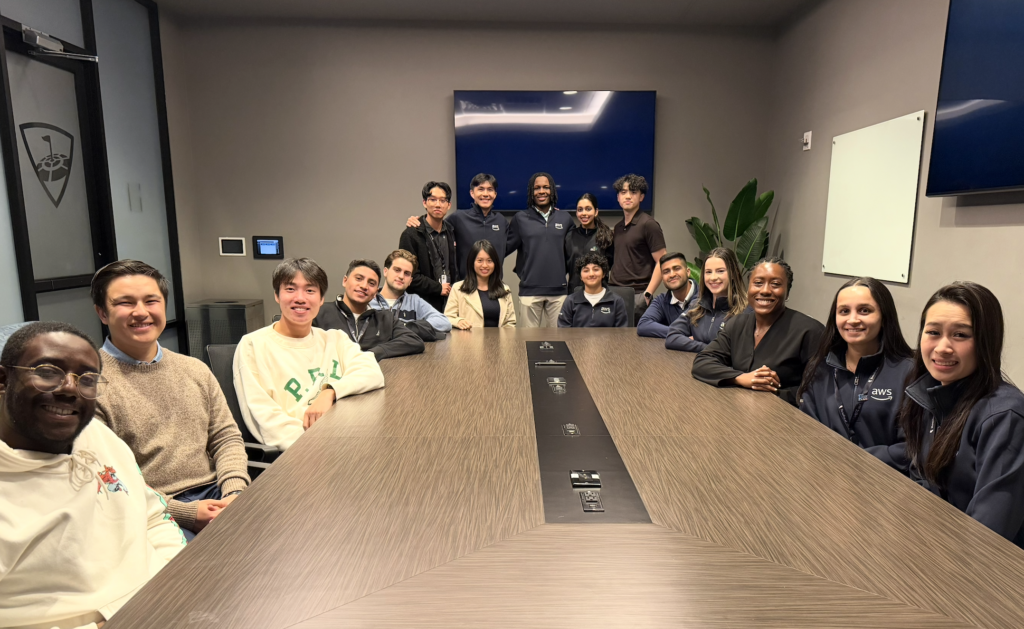
Through the First Tee Alumni Network, he recently attended AWS re:Invent, the world’s largest cloud computing conference, an experience that proved invaluable as he works toward his goal of becoming a program manager who bridges the gap between innovation and the operational frameworks needed to bring them to life.

Expanding what’s possible

Attending re:Invent, an opportunity made possible by First Tee Trustee AWS, helped Alex expand his horizons. “My time at re:Invent allowed me to explore roles and functions I previously knew little about or thought might be unobtainable,” he said.

Learning directly from AWS employees about their journeys in tech helped Alex refine his approach to his own career transition, particularly valuable as he pivots from military service to the private sector. Currently studying for his MBA at Duke University, Alex gained practical insights into how to communicate his value to potential employers, he said.

When asked to describe re:Invent in three words, Alex chose “insightful, exciting, immersive,” a fitting summary for a conference that brings together tens of thousands of technology professionals, innovators and industry leaders. But among the packed schedule of sessions and exhibits, some of Alex’s most memorable moments happened in familiar territory: on the golf course.

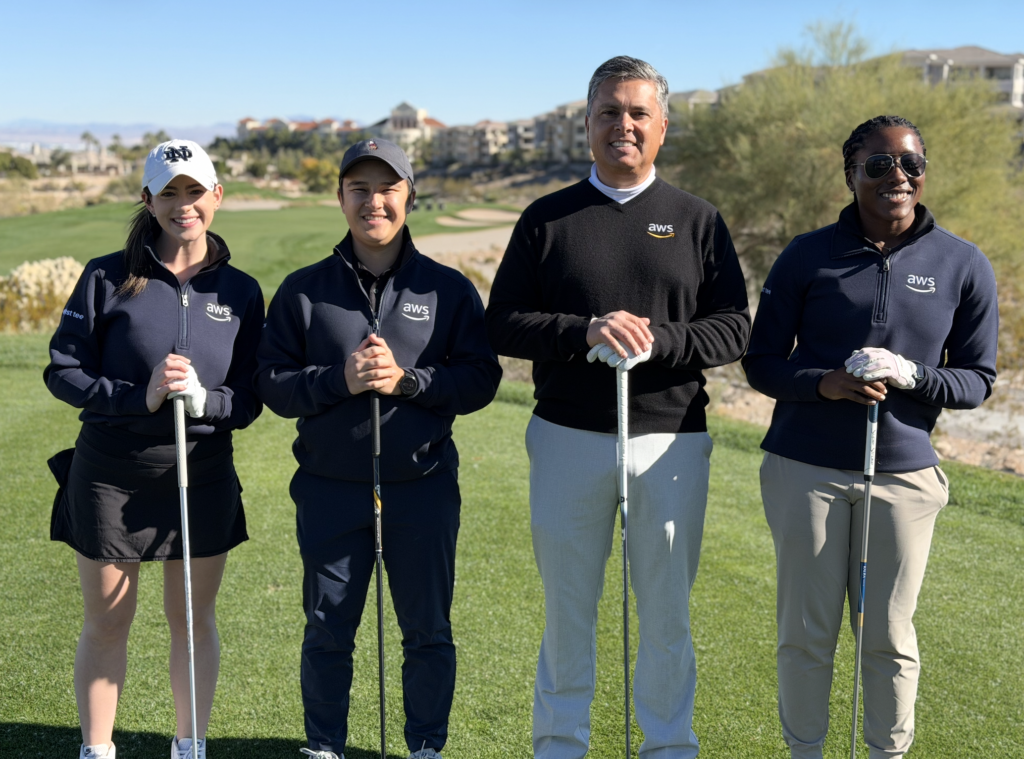
“Golf provides the perfect medium for having meaningful conversations and to dive deep into the experiences of AWS partners and fellow First Tee alumni,” Alex said. The golf outing and networking reception at TPC Las Vegas gave him the chance to connect with professionals in an environment where the life skills he learned at First Tee – like communication, confidence and building relationships – came into play.

“Connecting with First Tee alumni who are at various stages in their career and education was a blast,” he said, highlighting the lasting community that First Tee creates.

Enduring values and connections

Alex said First Tee lessons like integrity, perseverance, respect and judgment all carried into his military service and continue to guide him today. Now he’s following his dreams using strategies he learned at First Tee. “Whether it was planning for grad school or preparing for a career transition into tech, I use the framework taught to me by my First Tee coaches and mentors to break down a vision into sets of actionable goals,” he said.

For Alex, staying engaged with First Tee as an alumnus was a natural choice. “First Tee was a constant for me growing up,” he said. But beyond nostalgia, he’s found that the alumni community continues to offer real value, including connections to other young professionals who share similar values. Alex’s experience at re:Invent is just one example of how First Tee’s alumni program creates opportunities that extend far beyond the golf course.

How the stages of youth development inform golf instruction at First Tee 

You can play for a lifetime and never master golf. It’s what keeps many players coming back to the game: the search for the perfect drive, pitch, chip or putt.  

While golfers of all age will attest that there’s always room for improvement, young players can benefit from starting small and learning the sport in ways that are appropriate for their age and stage of development, helping them build confidence and setting them up for success in the long run. 

Featuring fun games, colorful landscapes and nontraditional equipment, this might mean a First Tee class will look different from a typical golf lesson, especially for younger players. But they’re designed to teach golf fundamentals, keep kids engaged and teach valuable life lessons that can be applied off the course. 

“At First Tee, we believe that meaningful learning happens when instruction aligns with a child’s developmental stage,” said Kristin Westberg, senior director of training and evaluation. “The shift to age-based learning in our curriculum wasn’t just a structural update; it was a strategic decision rooted in research and our commitment to youth development.” 

“By meeting kids where they are cognitively, socially and emotionally, we’re not only teaching golf more effectively, but we are also helping young people build confidence, character and resilience that lasts far beyond the course,” Westberg said. 

Here’s how the stages of youth development inform our programs: 

Age 7-9 

As the parents of our youngest participants know, there may be moments in these classes where kids aren’t holding golf clubs but practicing more familiar skills that can eventually translate to the course. For example, rolling a ball can help teach kids about distance control on the green, while playing catch can help improve hand-eye coordination. 

 At this age, kids are learning how to be friends, manage emotions and follow directions. That’s why First Tee coaches aim to keep kids moving, offer positive encouragement and provide clear instructions. 

Age 10-11 

During this stage, kids are often improving their fine motor skills and learning to stay on task. It’s also when the concept of “personal best” typically starts to resonate. When working with this age group, First Tee coaches refrain from comparing participants to one another, but rather compare a participant’s past and present performances. 

Through games and activities, kids are learning more complex golf concepts, like pre- and post-shot routine and club selection, but most participants are still focused on having fun and making friends. 

Age 12-13 

Most participants in this age group have chosen golf as their sport, and they’ll typically start picking up new golf skills more quickly. Because this group is advancing rapidly, parents may see skill disparities develop among players, but First Tee coaches are trained to make classes fun and engaging for all skill levels. 

While players in this age group have typically made serious strides in terms of distance response, target awareness, body balance and other golf fundamentals, they’re often facing more social challenges. This age group tends to be more conscious about what others think of them, which is why First Tee coaches are trained to encourage participation in all activities and cultivate strong and supportive relationships. 

Age 14+ 

Compared to younger players, teens are typically seeking guidance, suggestions and alternatives instead of detailed instruction, and this is reflected in First Tee’s class format. Coaches aim to create opportunities for teens to use real-life problem-solving skills, make their own decisions and support their peers. 

Many First Tee Chapters offer junior coaching opportunities for teens to work with younger players, giving them a taste of responsibility and an appreciation for volunteerism. Many chapters also offer competitive playing opportunities, junior advisory boards and other ways to keep teens engaged with the program. 

In conjunction with sponsors, First Tee headquarters offers a variety of national participant opportunities for teens, including leadership events and golf tournaments, as well as the First Tee College Scholarship Program

Learn more about First Tee’s Coach Philosophy

How the stages of youth development inform golf instruction at First Tee 

You can play for a lifetime and never master golf. It’s what keeps many players coming back to the game: the search for the perfect drive, pitch, chip or putt.  

While golfers of all age will attest that there’s always room for improvement, young players can benefit from starting small and learning the sport in ways that are appropriate for their age and stage of development, helping them build confidence and setting them up for success in the long run. 

Featuring fun games, colorful landscapes and nontraditional equipment, this might mean a First Tee class will look different from a typical golf lesson, especially for younger players. But they’re designed to teach golf fundamentals, keep kids engaged and teach valuable life lessons that can be applied off the course. 

“At First Tee, we believe that meaningful learning happens when instruction aligns with a child’s developmental stage,” said Kristin Westberg, senior director of training and evaluation. “The shift to age-based learning in our curriculum wasn’t just a structural update; it was a strategic decision rooted in research and our commitment to youth development.” 

“By meeting kids where they are cognitively, socially and emotionally, we’re not only teaching golf more effectively, but we are also helping young people build confidence, character and resilience that lasts far beyond the course,” Westberg said. 

Here’s how the stages of youth development inform our programs: 

Age 7-9 

As the parents of our youngest participants know, there may be moments in these classes where kids aren’t holding golf clubs but practicing more familiar skills that can eventually translate to the course. For example, rolling a ball can help teach kids about distance control on the green, while playing catch can help improve hand-eye coordination. 

 At this age, kids are learning how to be friends, manage emotions and follow directions. That’s why First Tee coaches aim to keep kids moving, offer positive encouragement and provide clear instructions. 

Age 10-11 

During this stage, kids are often improving their fine motor skills and learning to stay on task. It’s also when the concept of “personal best” typically starts to resonate. When working with this age group, First Tee coaches refrain from comparing participants to one another, but rather compare a participant’s past and present performances. 

Through games and activities, kids are learning more complex golf concepts, like pre- and post-shot routine and club selection, but most participants are still focused on having fun and making friends. 

Age 12-13 

Most participants in this age group have chosen golf as their sport, and they’ll typically start picking up new golf skills more quickly. Because this group is advancing rapidly, parents may see skill disparities develop among players, but First Tee coaches are trained to make classes fun and engaging for all skill levels. 

While players in this age group have typically made serious strides in terms of distance response, target awareness, body balance and other golf fundamentals, they’re often facing more social challenges. This age group tends to be more conscious about what others think of them, which is why First Tee coaches are trained to encourage participation in all activities and cultivate strong and supportive relationships. 

Age 14+ 

Compared to younger players, teens are typically seeking guidance, suggestions and alternatives instead of detailed instruction, and this is reflected in First Tee’s class format. Coaches aim to create opportunities for teens to use real-life problem-solving skills, make their own decisions and support their peers. 

Many First Tee Chapters offer junior coaching opportunities for teens to work with younger players, giving them a taste of responsibility and an appreciation for volunteerism. Many chapters also offer competitive playing opportunities, junior advisory boards and other ways to keep teens engaged with the program. 

In conjunction with sponsors, First Tee headquarters offers a variety of national participant opportunities for teens, including leadership events and golf tournaments, as well as the First Tee College Scholarship Program

Learn more about First Tee’s Coach Philosophy

Tips for keeping your child engaged with golf this winter 

As temperatures drop and days get shorter, it can be challenging to keep junior golfers engaged with the game they’ve grown to love over the summer. But colder weather doesn’t have to mean putting golf on hold.  

With a little creativity and intention, parents can help their children maintain the skills and character development they’ve built through First Tee programs. 

Turn your living room into a practice space 

You don’t need a full golf course to work on fundamentals. If you have space, create an indoor practice area where your child can work on their grip, stance and putting stroke. A simple putting mat or even a makeshift target using household items can keep their motor memory sharp. 

The beauty of indoor practice is that it naturally encourages one of our core life skills: discipline. Even a few practice sessions a week helps maintain muscle memory and shows kids the value of consistent effort.

Make it fun for the whole family 

Winter is a perfect time to make golf a shared family experience. Watch professional tournaments together and talk about the life skills you see on display, including how players handle disappointment, show respect to competitors or demonstrate perseverance through a tough round. 

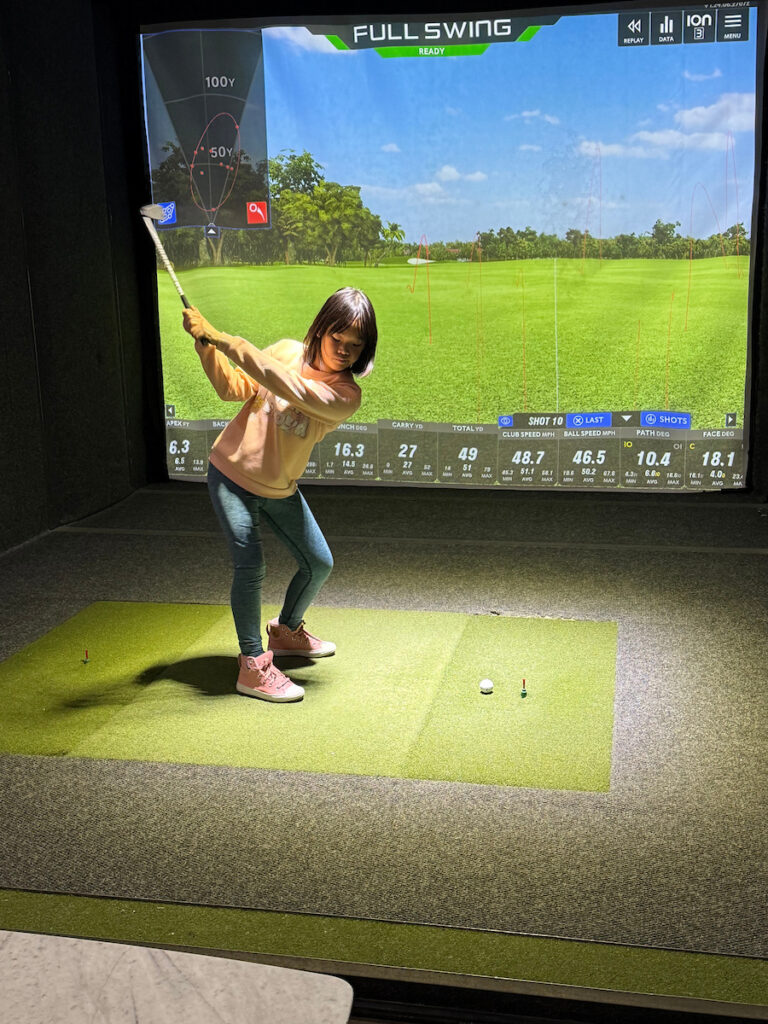
Many communities have golf simulators where the junior golfers can join their whole family to play together regardless of the weather outside. These shared experiences reinforce that golf is a lifelong pursuit that brings people together. 

Stay connected to the First Tee community 

Encourage your child to stay connected with their junior golf coaches and fellow participants. Many First Tee Chapters offer winter programming or access to the First Tee app, keeping kids engaged even when they can’t be on the course. These connections remind young people that they’re part of something bigger than themselves. 

Perhaps most importantly, continue the conversations that started at First Tee. When your child faces a challenge at school or in their personal life, reference the life skills they’ve learned in the program.  

These conversations help cement the understanding that the values learned through golf apply everywhere. Winter is an ideal time to deepen these lessons without the busy pace of summer schedules. 

Coach–Alumni Connection Spotlight: Stuart & Ethan

When Stuart Furlow first connected with First Tee — Metro Atlanta through a volunteer opportunity at his job with Accenture, he expected to teach golf. What he discovered instead was something much deeper.

His mentorship with Ethan quickly grew beyond swings and scores. Together, they navigated college goals, personal growth, and some of life’s biggest choices — forming a connection that reflects the true heart of our mission.

At First Tee — Metro Atlanta, coaches like Stuart invest in the whole person, not just the golfer. We’re grateful for mentors who show up, stay engaged, and make a lasting impact on young people like Ethan long after the final putt drops.

First Tee, Golf Digest honor 2025 network award winners advancing youth through golf

Golf Digest awards $175,000 to winning First Tee chapters in celebration of their impact

Ponte Vedra Beach, Fla. – (Nov. 5, 2025) – In partnership with Golf Digest, First Tee is proud to announce the recipients of its 2025 network awards, recognizing outstanding individuals and chapters who exemplify the organization’s mission to empower young people through golf.

“First Tee has more than 10,000 passionate and committed adults who are involved in supporting chapters throughout the network,” said CEO Greg McLaughlin. “Congratulations to those selected for our 2025 network awards. Our mission would not be possible without their involvement and leadership. We are also very grateful to Golf Digest for their continued support of First Tee and our chapters.”

The awards celebrate the transformative work of coaches, volunteers, educators and leaders across the First Tee network. In recognition of their achievements, Golf Digest will award $175,000 in grants to support the honorees and their chapters.

“We are proud to honor these inspiring individuals and chapters who bring the game of golf to kids of all backgrounds,” said Chris Reynolds, general manager of Golf Digest. “Their dedication helps shape character and confidence far beyond the course.”

First Tee offers programming at golf courses, schools and community sites across the country and in select international locations, impacting more than 3.1 million youth annually. It celebrates its annual award winners each fall. This year’s recipients are:

Tim Finchem Leadership Award: Andrew Hunt, First Tee – Florida Gold Coast
Founder of First Tee – Treasure Coast (now part of First Tee – Florida Gold Coast), Hunt has served as a board member and passionate mentor since 2012. His personal contributions total more than $3.5 million to various First Tee chapters and national initiatives. Most notably, he provided $450,000 to establish a new learning center in Fort Pierce, First Tee – Florida Gold Coast’s most underserved community.

Coach of the Year: Anthony Rodriguez, First Tee – Metropolitan New York
With 15 years of dedicated service, “Coach Arod” contributed more than a thousand hours of instruction in the past year alone. He’s been an integral part of the chapter’s efforts to make golf more accessible to New York City kids and teens, including an outreach initiative at Mosholu Golf Course in the Bronx. 

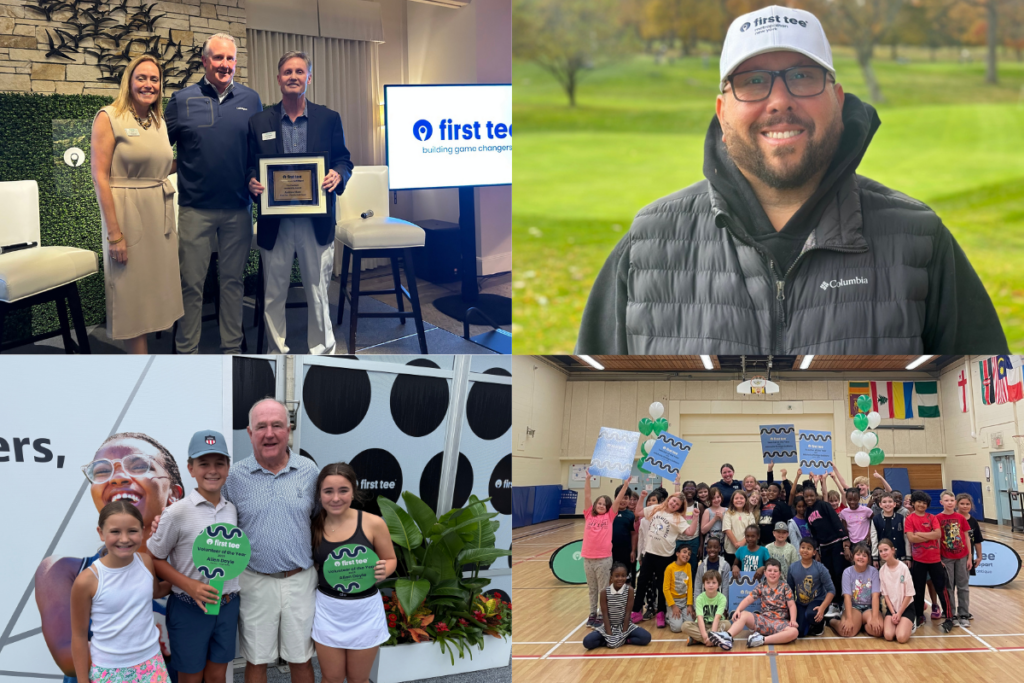
George H.W. Bush Volunteer of the Year: Allen Doyle, First Tee – Troup County
A former professional golfer, Doyle has led First Tee – Troup County for two decades as its board president and largest donor. Known for his hands-on approach, he mows grass, repairs clubs and coaches at the chapter every weekend.

Teacher of the Year:  Michelle Phillips LeBlanc, First Tee – Atlantic
Based at Forest Glen School in New Brunswick, Phillips LeBlanc has introduced over 400 students to the game of golf. She’s organized golf course field trips and a STEM mini golf challenge, where students design a course in the gym and welcome parents to play.

Each of the chapters will receive $25,000 from Golf Digest to further their impact. First Tee – Canada will split its prize with Forest Glen School. Additionally, Golf Digest will make financial contributions to three chapters that are being recognized with the Barbara A. Douglas & Dr. William J. Powell Community Award, which celebrates chapters that are championing access and inclusivity.

  • First Tee – Greater Richmond ($35,000)
    Hosting over 25 annual field trips for Title I schools, this chapter has impacted 500+ kids through partnerships with organizations like the Boys & Girls Club and Police Athletic League.
  • First Tee – Birmingham ($25,000)
    The chapter boasts a diverse roster of board members and coaches, ensuring every participant has an advocate or mentor with whom they identify. It also offers scholarships to all participants on free- or reduced-lunch programs.
  • First Tee – East Baton Rouge Parish ($15,000)
    Led by executive director Henry Pointer, Louisiana’s first Black PGA professional, this chapter maintains deep partnerships with local schools and nonprofits.

First Tee honors Pebble Beach Company with prestigious Lifetime Achievement Award

The iconic golf destination is being recognized for decades of commitment toyouth development

PEBBLE BEACH, Calif. (Sept. 23, 2025) – Youth development organization First Tee today announced Pebble Beach Company as the recipient of its Lifetime Achievement Award. This prestigious honor recognizes the company’s unwavering commitment to supporting First Tee’s mission of building future leaders through golf.

“On behalf of Pebble Beach Company, we are honored to receive First Tee’s Lifetime Achievement Award,” said Heidi Ueberroth, Co-Chair of Pebble Beach Company. “We have witnessed firsthand how First Tee transforms participants into confident leaders, and we are proud to play a role, including serving as the backdrop for these life-changing moments. This partnership embodies our dedication to youth development and demonstrates how the game of golf can open doors and create opportunities for the next generation.”

Pebble Beach Company has demonstrated dedication to youth development by consistently offering its exceptional venues to First Tee initiatives. More than a thousand First Tee participants have competed in the PURE Insurance Championship, a unique PGA TOUR Champions event hosted at Pebble Beach Golf Links since 2004 with Spyglass Hill Golf Course joining as co-host in 2021. Pebble Beach Company has also played a pivotal role in advancing First Tee’s mission by providing access to its incredible courses, venues and views in support of First Tee events over the years.

“Beyond its status as a world-class golf destination, Pebble Beach Company has consistently demonstrated a deep commitment to philanthropy and community support, understanding that true greatness extends far beyond the boundaries of even the most famous golf course,” said Greg McLaughlin, CEO of First Tee. “For more than 20 years, First Tee has been a beneficiary of that commitment.”

Pebble Beach Company’s support of the PURE Insurance Championship has provided invaluable experiences for First Tee participants and alumni, giving them a once-in-a-lifetime opportunity at an impressionable age to forge mentorships and build confidence.

The Lifetime Achievement Award honors Pebble Beach Company’s sustained commitment to helping First Tee grow and succeed over more than two decades.

image of group
First Tee CEO Greg McLaughlin, legendary quarterback Steve Young, First Tee Honorary Chair Jim Nantz, Pebble Beach co-chairs Heidi Ueberroth, Brian Ferris and Bill Perocchi, and PGA TOUR Commissioner Jay Monahan pose with a declaration celebrating Pebble Beach Company’s support of First Tee.