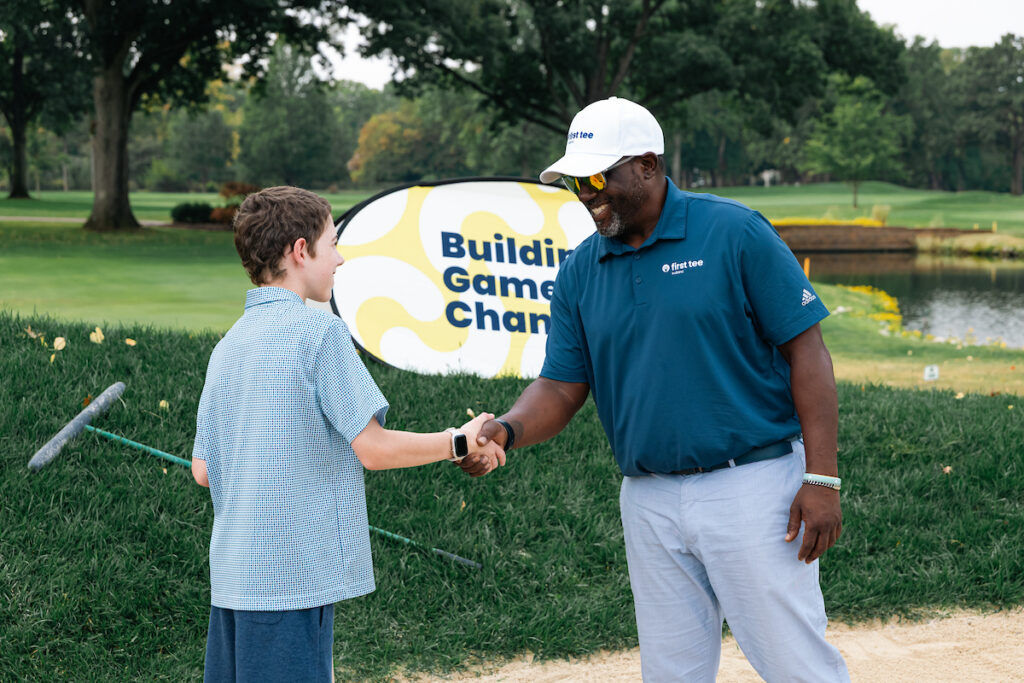
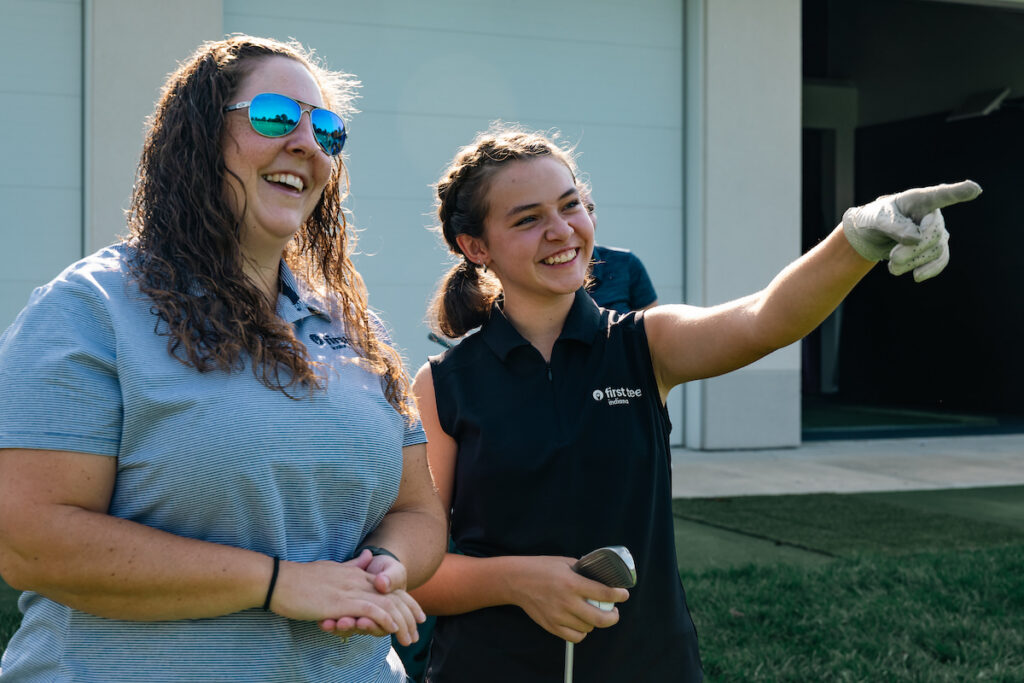
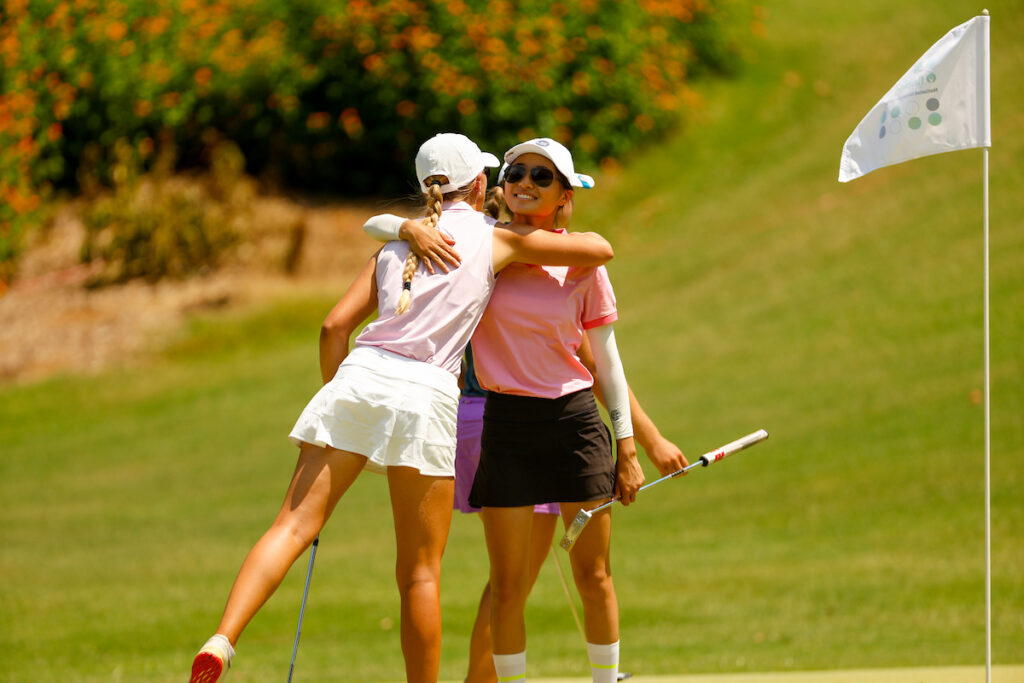
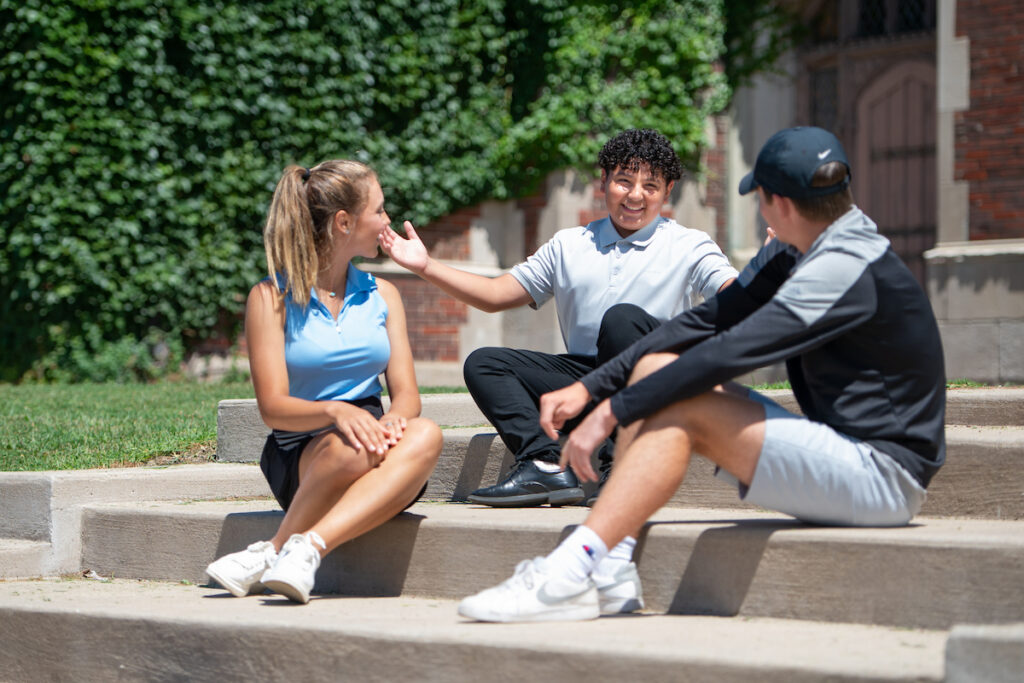
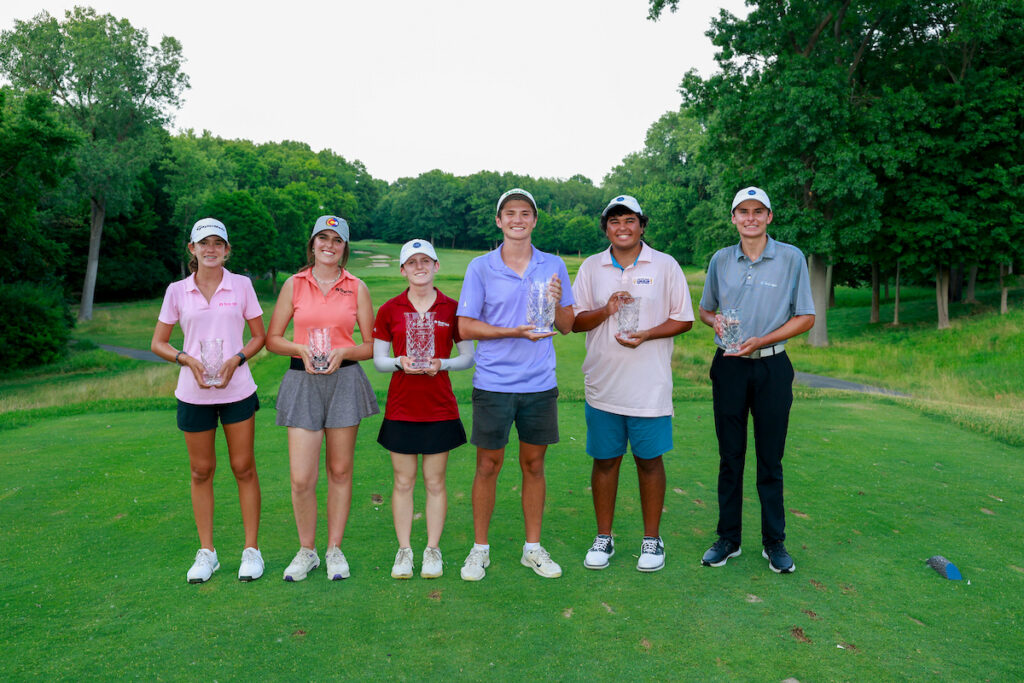
First Tee coaches feel proud when a new player launches a drive or sinks a putt for the first time. But the true magic of our program happens off the course when a participant overcomes a tough obstacle at school or when an alumnus achieves a big goal.
Those moments highlight how much mentorship matters.
A landmark 30-year study by Big Brothers Big Sisters of America found that young adults with mentors earned 20% more than their peers. The same research determined that mentorship is one of the most cost-effective youth development interventions available.
Drawing on results from over 70 program evaluations, MENTOR: The National Mentoring Partnership has found that mentoring supports improved grades, test scores and educational attainment, while also improving classroom behavior and school attendance.
But accessible mentors aren’t always easy to find
For all of mentorship’s documented benefits, access to mentors isn’t equal — and the gap is widening.
A 2024 report by MENTOR found that today’s 18–21-year-olds are 9% less likely to have had a mentor growing up compared to the Millennial generation. More than one in three young adults say they grew up without the support of any mentor at all.
The research is clear that mentoring relationships promote a strong sense of belonging, an asset that’s essential for healthy youth development. For the young people who most need a caring adult in their corner, that connection is often unavailable. It’s a gap that programs like First Tee are uniquely equipped to fill.
More than a game
According to research from First Tee and The Harris Poll, 88% of parents with coached children say their child has become more likely to speak up for themselves in other areas of life since participating in coached sports. An even larger majority — 94% — believe sports help children grow their confidence and social skills.
First Tee coaches teach participants how to introduce themselves to playing partners, and participants learn the A-L-R method for engaging in conversation:
A: Ask questions to learn about someone. L: Listen to their response. Make sure you’re listening to understand rather than thinking of what to say next. R: Reflect and respond thoughtfully with a follow up question or by sharing your own thoughts or feelings on the topic.
The impact of coaching lasts well into adulthood. Among parents who had coaches in their own youth, 67% say they wouldn’t be where they are today without those adults. They credit their coaches with teaching them to collaborate, lead and overcome challenges.
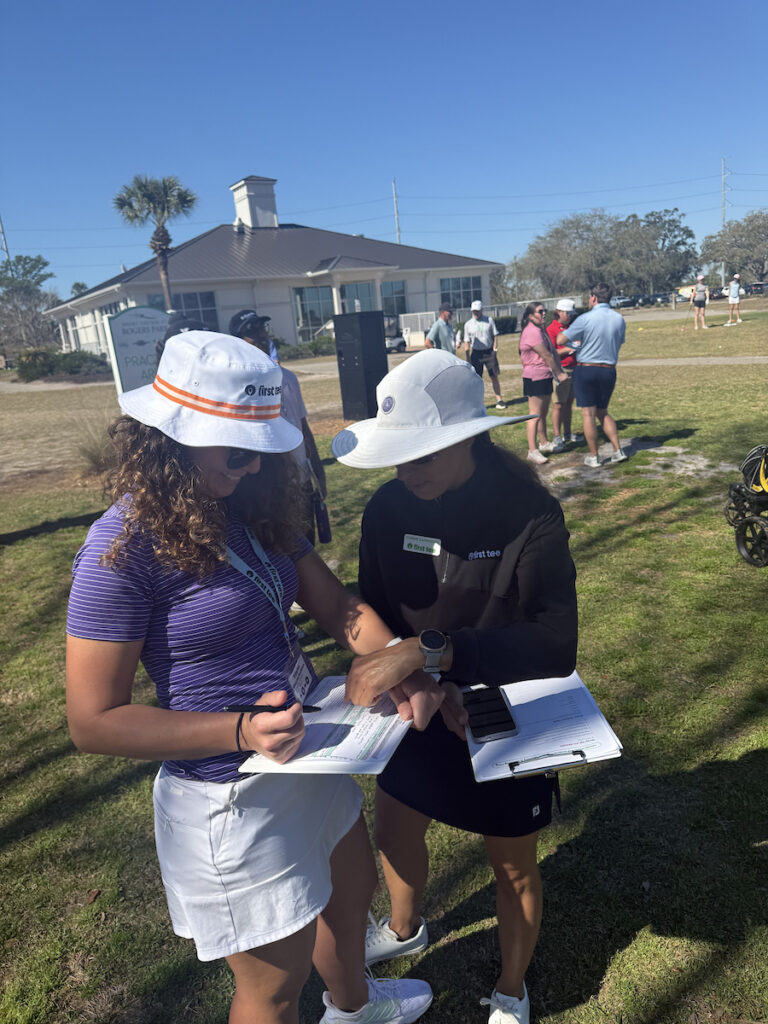
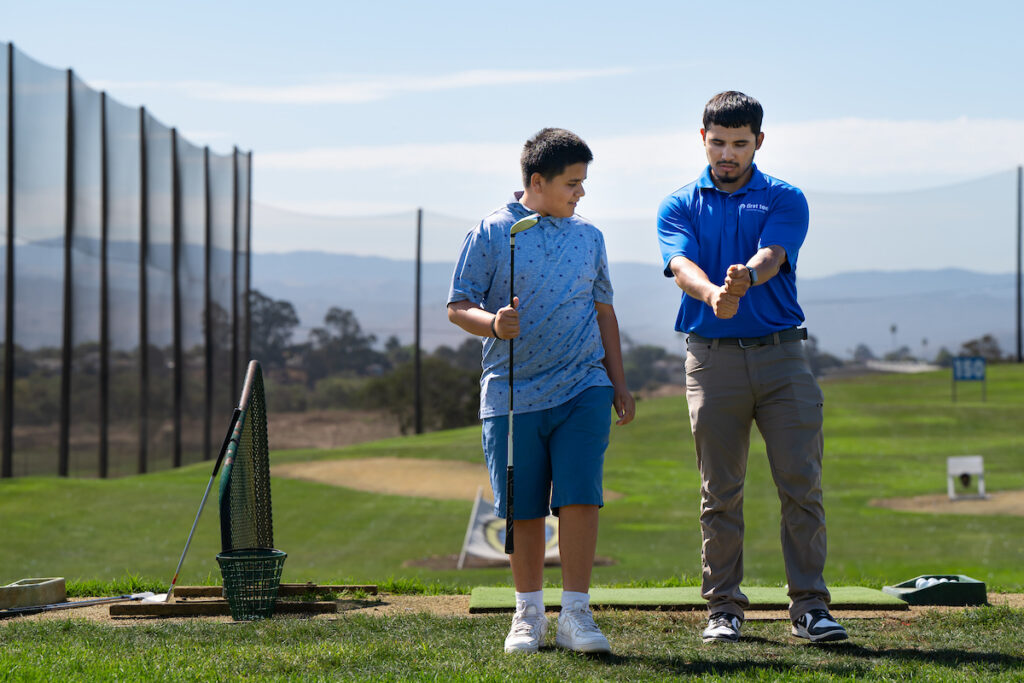
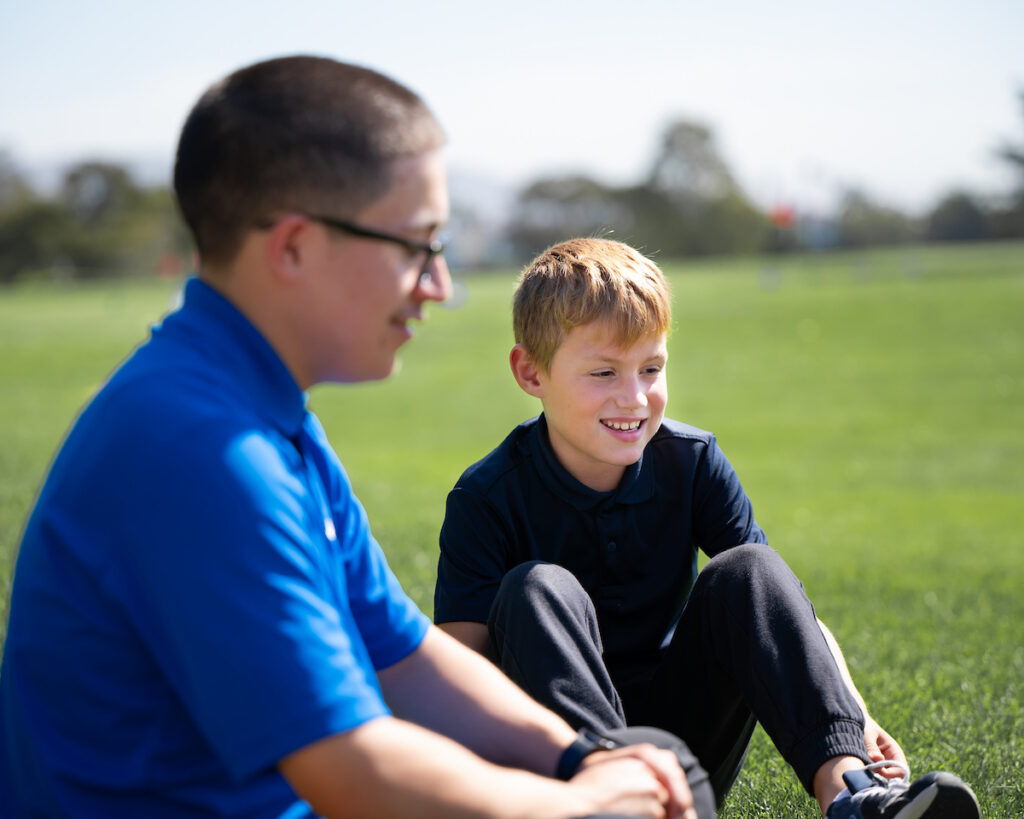
Most First Tee coaches are not golf professionals and that’s OK – not every First Tee participant aspires to play competitive golf, but we ask our coaches to lead by example as great listeners, cheerleaders and positive role models for the next generation.
Support First Tee’s efforts to provide quality mentors for our future leaders. Become a Donor Ambassador today.
Being shy can come with lots of overlooked benefits. Shy people tend to observe carefully before jumping in, which means they can notice details others miss. They’re often good listeners, empathetic and self-aware.
Still for parents of shy kids, it can be difficult to watch your child struggle to connect with their peers. You want them to experience the joy of friendship, but pushing too hard can backfire. Sports offer a unique environment where shy kids can build friendships at their own pace. In fact, our research with The Harris Poll shows that 94% of parents believe playing sports helps children build confidence and social skills.
Compared to many team sports, golf provides a more measured environment. There’s time between shots for conversation, opportunities to observe others before acting and a shared focus that takes the pressure off constant eye contact or quick responses. At First Tee, we’ve seen countless shy children blossom as they discover that the golf course is a safe space to practice being themselves.
But making friends doesn’t happen automatically. Even in the most welcoming environment, shy kids might benefit from a little coaching on how to connect.
Facilitating connections with A-L-R
At First Tee, we teach a simple framework that can transform how shy kids approach new friendships: Ask, Listen, Respond.
Ask questions: Encourage your child to become curious about others. Asking questions isn’t about filling awkward silence but about discovering who someone really is. Help your child understand that questions about a person’s background, experiences or interests can reveal commonalities they never expected.
Listen to understand: Many shy kids are already good listeners by nature, but in social situations, they may be preoccupied by worrying about how to respond. Introduce the concept of active listening: focusing genuinely on what the other person is saying because you’re interested, not because you’re preparing your reply.
You can practice this at home during dinner conversations or car rides. When your child shares something, model active listening by giving them your full attention, asking follow-up questions and reflecting back what you heard. Then gently encourage them to do the same when others are speaking.
Reflect and respond: The final piece is showing others that you were truly listening. Teach your child that responding doesn’t mean having the perfect comeback or the funniest joke. It means acknowledging what was shared and building on it.
A simple, “That sounds really cool. What was your favorite part?” or “I’ve felt that way too,” can be enough to keep a conversation flowing and signal genuine interest.
The beauty of First Tee is that it provides natural, repeated opportunities to practice these skills. As a parent, you can support this process by encouraging participation in group activities, celebrating small wins and being patient; some friendships develop quickly, while others take a full season to form.
Learning to ask thoughtful questions, listen actively and respond with authenticity can help prepare your child for success in school, future careers and all of life’s relationships. At First Tee, we’re committed to creating an environment where every child can discover their potential both on and off the course, because golf isn’t just about the game; it’s about the friendships formed, the confidence built and the life skills that last forever.
Every month, our Executive Director shares personal reflections on the work we do and the impact we witness at First Tee — Metro Atlanta. These letters offer an inside look at how we are building mental health and emotional resilience through golf—not just the outcomes we celebrate, but the moments that shape us, the lessons we’re learning alongside young people, and the coaches who show up every day to create spaces where belonging is possible.
Like a caddie’s yardage book that maps the course with careful observations and insights gained from being close to the game, these letters document what we are seeing on the ground, what we are building together, and where we are headed as an organization. They are honest, reflective, and rooted in the belief that leadership means bearing witness to the work and sharing what that work teaches us.
Each letter explores a different aspect of youth development, mental health, and the power of community—always through the lens of real experience, real stories, and real impact.
If you are a major supporter of First Tee — Metro Atlanta, you receive The Yardage Book directly in your inbox each month. These letters are shared here on our website after initial distribution as a window into the heart of our mission and an invitation to understand the deeper work happening on our courses and in our community.
This isn’t just about golf. It’s about what golf makes possible.
March 2026
I wasn’t a golfer when I started working at First Tee — Metro Atlanta.
That probably sounds strange coming from someone who’d worked with the PGA TOUR and the AJGA. I’d been around the game at the highest level. I understood golf. I could talk about it, organize around it, appreciate it.
But playing it myself? That was different. I didn’t grow up with a club in my hand. I wasn’t the guy who could step onto the course and play. Golf was the thing I worked in, not the thing I did.
But then one day in 2014, early in my time here as Program Director, one of our coaches put me on the spot.
His name was William “Junebug” Lewis. GSGA Hall of Famer. Legend in the Atlanta golf community. One of the most respected coaches we’ve ever had. And he was teaching a class when he turned to me and said, in front of all the kids: “Jenae, come hit a shot.”
I knew what was going to happen. I was going to shank it. The kids were going to see that I had no idea what I was doing. And they were going to look at me differently. They were going to wonder why someone who couldn’t even hit a golf ball was supposed to be leading this program.
I stepped up. I swung. And sure enough, I hit a duck hook. The ball curved hard left, nowhere near where I was aiming.
And then a little boy shouted: “OHHH WEEE, he hit it far!”
Not “that was terrible.” Not “you missed.” Just pure excitement that I’d made solid contact and the ball had gone somewhere.
Coach Lewis looked at me and said something I’ve never forgotten: “They don’t know that you don’t know. They see that you can actually get the ball in the air and that is good enough for them.”
That moment changed something in me.
Here’s what I realized: I wasn’t bad at golf. I was just holding myself to the wrong standard.
So I started practicing. I’d eat lunch at my desk so I could spend my break on the range hitting balls, trying to figure it out. I’d stay after work to play a few holes, which meant longer days, less time at home, more repetition when nobody was watching.
And for a long time, nothing felt different. I was still hitting duck hooks. Still inconsistent. Still the guy who worked at a golf nonprofit but couldn’t really play.
Until one day, I went out to play with some of our older participants. These were kids who knew I wasn’t a golfer. They’d been ribbing me about it for months, in that good-natured way teenagers do when they know you can take it.
But that day, after we finished, a few of them came up to me and said: “We’re impressed. You’ve gotten really good.”
And that’s when I realized: I had. Somewhere between the lunch breaks on the range and the evenings staying late and all those duck hooks nobody saw, I’d actually learned how to play. I started keeping a handicap after that. Eventually got down to an 11.
Not because I suddenly believed I could. But because I was willing to be bad at something in front of people until I wasn’t anymore.
This is what we mean when we talk about growth mindset.
Not the inspirational poster version. Not “you can do anything if you just believe.” The real version. The one that requires you to fail, publicly, repeatedly, and keep showing up anyway.
The version that says: the person you are today isn’t the person you have to be tomorrow. But the distance between those two versions is filled with work nobody sees and moments when you want to quit.
Our Spring session started at the beginning of this month. New participants walked onto the range for the first time. Returning participants came back, ready to try again.
And every single one of them is about to have their own version of that moment. Their own duck hook. Their own “OHHH WEEE, he hit it far” from someone who sees progress they can’t see yet. Their own season of showing up when nobody’s watching. Their own moment when someone says “wait, you’ve gotten really good at this.”
That’s the work we do here. We create space where growth mindset isn’t just taught, it’s lived. Where kids get to be bad at something and stay anyway. Where coaches model what it looks like to still be learning. Where the standard isn’t perfection, it’s progress.
And where someone is always there to shout “OHHH WEEE” when you make contact, even if the ball doesn’t go straight.
So here’s what I want to ask you this month:
What’s something you’re still learning? Not something you’ve mastered. Something you’re actively bad at, or uncertain about, or working through.
And who’s been your version of that little boy? Who’s seen progress in you that you couldn’t see in yourself yet?
Because here’s what I’m learning: growth doesn’t happen when we already know how. It happens when we’re willing to not know, in front of people, and trust that we’ll figure it out.
And if I’m being honest? I’m still good for a duck hook here and there. But I keep working at it. That’s what growth mindset actually looks like.
Your support of First Tee — Metro Atlanta creates the space where that kind of growth is possible. Where participants and coaches and yes, even Executive Directors, get to become people they didn’t think they could be.
This Spring, we’re watching it happen all over again. Shot by shot. Day by day. Duck hook by duck hook.
And I’m grateful you’re part of making that possible.
With gratitude,
Jenae
February 2026
I’ve been thinking about phone calls lately. The ones we almost don’t make. The ones where we rehearse what we’ll say, hoping it’ll be quick, hoping we won’t need to say too much.
Last month, I got one of those calls.
It was from someone who went through our program years ago. He’s a coach with us now. The kind of person who shows up early, remembers every kid’s name, brings energy even on cold mornings. From the outside, he has it together.
He called because he was going through a breakup. That’s how it started, anyway. What he thought would be a quick conversation (maybe ten minutes of me telling him it would be okay) turned into two and a half hours.
And somewhere in that conversation, it stopped being about heartbreak and became about something deeper. About being left behind by the people who were supposed to stay. About opening yourself up for the first time and getting hurt. About those quiet moments when the weight gets heavy and you wonder if anyone would notice if you just stopped trying.
I told him what I saw: that he has this glow about him. That the kids light up when he’s around. That his presence matters more than he knows.
And then I did something I don’t do often. I told him about my twenties.
Not the version of my twenties that looks good in retrospect. The real version. The part where I didn’t have it figured out. Where I was struggling to hold everything together and pretending I wasn’t. Where I felt like I was supposed to have answers I didn’t have.
I told him: the version of me you know now? The one who runs this organization, who seems like they have it together? That person didn’t exist then. And honestly, some days that person still doesn’t exist.
But here’s what I learned: you don’t get through the hard holes by playing the whole round at once. You take it shot by shot. Moment by moment. And when you look back at the scorecard later, you realize the rough patches don’t define the round. They’re just part of it.
By the end of the call, something had shifted. Not his circumstances (the heartbreak was still real, the old wounds were still there). But his permission to keep going felt more solid. And mine did too.
Here’s the thing about asking for help: we convince ourselves it’s a burden.
I know because I just learned this lesson myself.
Recently, I was working through a significant decision for the organization. It was complex, involved multiple moving parts, and I genuinely thought the right thing to do was figure it out on my own and then present the solution to our Board.
That’s what leadership looks like, right? Having the answers. Not burdening volunteers with the messy middle. Bringing them solutions, not problems.
Except our Board leadership pulled me aside and said something I wasn’t expecting: “Help is available to you. You don’t have to carry this alone.”
Their leadership experience let them see questions I hadn’t thought to ask myself. They could see that I was trying to protect them from the weight of the decision when what I actually needed was their wisdom in the middle of it.
And when they offered that, something released in me. Not because they made the decision easier, but because they reminded me: we all need each other. Even (especially) the person who’s supposed to have it figured out.
This is the work we do at First Tee — Metro Atlanta.
We’re teaching young people that asking for help isn’t weakness. It’s wisdom.
That the strongest thing you can do when you’re in a rough patch isn’t to push through alone. It’s to call someone and say: I need help. I’m not okay right now. Can you walk with me through this?
Our coaches create space for those conversations. They model what it looks like to struggle and still belong. To not have all the answers and still be worthy of support. To take things shot by shot instead of carrying the weight of the entire round.
And when a young person who went through our program years ago picks up the phone (not because everything is falling apart, but because he trusts that someone will be on the other end) that’s when I know this work is bigger than golf.
So here’s what I want to ask you this month:
When was the last time you asked for help? Really asked, not the polite “could you grab that for me” kind of asking, but the vulnerable “I can’t do this alone” kind?
And who answered?
Because here’s what I’m learning: the people who show up when we ask aren’t burdened by it. They’re honored. They’re reminded that they matter. That their experience, their wisdom, their presence makes a difference.
Your support of First Tee — Metro Atlanta creates a community where help-seeking isn’t just allowed, it’s modeled. Where young people see adults who don’t have it all figured out but who keep showing up anyway. Where asking for help is understood not as failure, but as the courage to keep writing your story.
This month, I’m grateful you’re part of the community that makes those phone calls possible. That creates space for two-and-a-half-hour conversations. That reminds young people (and reminds me) that we don’t have to carry it all alone.
Shot by shot. Together.
With gratitude,
Jenae Jenkins
January 2026
Happy New Year! I hope 2026 is off to a meaningful start for you and yours. I’m grateful to begin this year in conversation with you, and deeply thankful for your investment in our work in 2025. As promised, I’m launching a monthly series where I’ll share more about our mental health work at First Tee — Metro Atlanta. This is the first of twelve letters, and I’m starting with something personal.
I’ve been thinking about what we ask of ourselves in January. We’re supposed to feel motivated, optimistic, ready to become someone new. But for many of us, and especially for young people, this season doesn’t bring inspiration. It brings pressure. Pressure to have it figured out. To start fresh. To transform overnight. To finally become the version of ourselves we think we’re supposed to be.
But here’s what I’ve learned: when you’re standing in a moment that requires you to start over, it often doesn’t feel like possibility. When you’re living it, it can feel like endings, like losing what you had, not gaining what’s next. That’s why I’m starting here.
In December, I told you I’d share more this year about our mental health work, about how we’re strengthening emotional resilience through golf, about the moments that shape how I lead this organization. This is the first of twelve conversations we’ll have in 2026. Each month, I’ll pull back the curtain on a different part of this work.
And in January, when the noise about new beginnings is loudest, I want to share something personal about what real starting over actually requires.
I was a senior in high school when I found out my girlfriend was pregnant. College felt impossible. My future felt like it was closing before it ever opened. The statistics about teen parenthood were clear: things were going to hard and more than likely, I wasn’t going to make it.
I told my parents, who were heartbroken. And then I had to face my girlfriend’s mother. I expected anger. Disappointment. A door slammed shut. Instead, she said: “While I am disappointed, Jenae, don’t let this make you decide not to go to college. I believe in you.”
Here’s what changed in that moment: not my circumstances, but my permission to belong.
I was still going to be a teen parent. College was still going to be hard. None of the external realities shifted. But something internal did. She told me I belonged in my next chapter. That I wasn’t disqualified. That the future I’d imagined wasn’t gone, it was just going to look different. She gave me permission to keep going when everything in me wanted to quit and give up on the goals I had always had. And that became the foundation I stood on when nothing else felt stable.
Every day at First Tee — Metro Atlanta, I meet young people standing in their own version of that moment.
They’re already surrounded by noise. Social media showing them everyone else’s highlight reels, a culture that celebrates overnight success while hiding the years of struggle behind it, pressure to have everything figured out right now when most adults know that life is full of pivots we never saw coming. They’re measuring themselves against the 5% while living in the reality of the 95%. And in January, that gap feels even wider.
What they need is what I needed: someone who sees them in their struggle and still believes they belong in what comes next.
That’s the mental health work we do here. With coaches who understand that young people need space to struggle without shame, to make mistakes without being defined by them.
Our coaches ask questions like “What do you need right now to feel like you can keep going?” They create moments where a young person can say “I’m not good at this yet” and hear back “You belong here anyway. Especially on the hard days.” Where starting over isn’t a sign that something’s wrong, it’s proof that you’re still in the game. Where the message underneath everything is: You belong here. You can begin again. We believe in you.
Here’s what I’ve learned about new beginnings: you need to believe change is possible. But just as importantly, you need someone who believes you belong in that change.
Not someone who has all the answers. Not someone who makes it easy. Someone who sees you in the middle of it and says: you still belong here.
So as we step into this new year together, I want to ask: Who gave you that when you needed it most? Who believed you belonged in your next chapter even when you weren’t sure yourself?
And the bigger question: How can we be that for the next generation?
Your support of First Tee — Metro Atlanta makes you part of the community that gives young people permission to belong. This year, I’m inviting you to see even more of how that support translates into real change.
Every month, I’ll share more. For now, I want you to know: the work you support isn’t just about golf. It’s about giving young people permission to keep writing their own stories.
Every golf parent has watched it happen. Your child lines up a putt, swings with confidence and misses. Maybe their shoulders drop. Maybe there’s a frustrated sigh. And in that moment, you might wonder: Is this good for them?
At First Tee, we’d say yes.
Golf is one of the few sports that puts a young person face-to-face with failure on almost every hole, and that’s exactly what makes it such a powerful teacher. When kids learn to navigate a missed shot, a bad round or a score that didn’t reflect their effort, they’re building something far more important than their game. They’re building resilience.
The scorecard doesn’t lie, and golf’s honesty can be uncomfortable at first. But over time, it teaches kids to take ownership of their performance — a life skill that carries far beyond the course.
At First Tee, our coaches create a safe space where that accountability feels empowering, not defeating. Young people learn that a bad shot isn’t a reflection of who they are. It’s information. It’s an opportunity to adjust, refocus and try again.
What bouncing back looks like
Resilience isn’t about pretending failure doesn’t hurt. It’s about developing the tools to move through it. At First Tee, we view failure as a “First Attempt In Learning,” recognizing there’s always a lesson to be gleaned when things don’t go right.
In First Tee’s curriculum, participants work on skills like emotional regulation, positive self-talk and setting goals, which all come naturally on the course. When a young person learns to take a breath after a bad hole and approach the next tee box with a fresh mindset, they’re practicing exactly the kind of response that will serve them in a tough exam, a difficult friendship or a challenging moment at work someday.
That kind of reflection doesn’t happen by accident. It happens because coaches are asking the right questions, creating space for young people to process their experiences and grow from them.
“We’ve watched Blayze transition from reacting to challenges to strategically managing them,” said Landon and Holly Chapman, parents of First Tee – Indiana participant, Blayze Chapman. “By applying the STAR (Stop, Think, Anticipate, Respond) model, he’s replaced frustration with perseverance and judgment. Whether he’s navigating a double-bogey or a heavy academic week, he no longer lets a single moment define his day. He’s learned to ‘reset’ with a level of composure that most adults struggle to maintain, proving that his character is anchored in something much deeper than a scorecard.”
The role parents play in the process
Here’s something we hear from families all the time: The lessons don’t stay on the course. While First Tee programming is typically delivered in golf settings, the goal is for parents to see their children handling frustration differently at home, in school and in other activities Our aim is for participants to grow in patience and become more articulate about their feelings.
Of course, parents play a big role in that. When your child comes home after a tough round, how you respond matters. Instead of jumping to fix the problem or minimize their frustration, try asking open-ended questions: What was the hardest part today? What would you do differently next time? What’s one thing you’re proud of, even if the score wasn’t what you hoped?
These conversations reinforce what your child is learning at First Tee and help them internalize the idea that struggle is a normal, even necessary, part of growth.
“Golf has given Blayze a quiet, internal confidence rooted in responsibility and integrity,” said the Chapmans. “Through First Tee, he’s developed the social dexterity to engage with mentors and the self-assurance to lead his peers.”
To support First Tee and its efforts to teach life skills and values through golf, consider becoming a Donor Ambassador today!
Izzy Kornmeyer didn’t know how to hold a golf club when she started at First Tee – Indiana in 8th grade. Now, as a high school senior and varsity golfer, she can’t stop thinking about the game that has completely changed her life.
“Golf has changed me for the better, and I am forever grateful for it,” she said.
Izzy’s golf journey started with Sunday mornings watching her dad and grandpa head out to play. When she decided to try high school golf, her mom signed her up for First Tee, hoping the program would give her daughter the foundation she needed.
That first tournament was humbling. After top-slicing her opening drive, Izzy shot 110. But instead of giving up, she leaned into the challenge. Several summer tournaments and countless practice sessions later, she returned to that same course and shot 83, proving what dedication and perseverance could accomplish.
Now Izzy is preparing to play collegiate golf at St. Thomas University in Miami, where she’ll be a first-generation college student.
Finding her voice
The transformation wasn’t just about golf scores. Izzy arrived at First Tee as a quiet, uncertain beginner who felt out of her element. Over four years, she evolved into a confident mentor and leader who now helps launch new First Tee – Indiana initiatives through the Leaders In Training Program.
Her leadership extends far beyond the golf course. Izzy serves on First Tee – Indiana’s Participant Advisory Council and was chosen as a Youth Deacon at Second Presbyterian Church.
Izzy’s approach to leadership is guided by her faith and the values she’s developed through First Tee. She lives by Matthew 20:26: “Whoever wants to become great among you must be your servant.”
“I now understand that true leadership isn’t about being in control,” Izzy said. “It’s about being present, expressing kindness and prioritizing other people before yourself.”
Whether she’s volunteering in the church nursery, creating encouraging TikTok content or being the first to help others at First Tee – Indiana, Izzy leads with kindness and compassion.
Making an impact
When she’s not competing, Izzy is often watching professional golf, practicing and or giving back to others. In 2024, she attended the First Tee Innovators Forum in Phoenix. During the event, participants plan service projects they execute in their communities. Izzy ultimately collected 700 full-sized hygiene products and $500 for the Julian Center, Indiana’s largest organization supporting victims of domestic violence, sexual assault and other crises.
Her journey from a nervous beginner who couldn’t grip a club to a confident leader who helps others find their own path proves what First Tee has always known: With the right support, young people can achieve remarkable growth.
For Izzy, that growth has been about more than improving her golf game. It’s been about discovering her voice and leading with kindness – one shot, one challenge and one act of service at a time.
Some people find golf. Golf found Coach Shayna before she could even see over the top of the flagstick. Growing up in Unionville, Missouri, Shayna was just 3 when her grandparents cut down a putter and packed her into their three-wheel Harley-Davidson golf cart, heading to their nine-hole course with sand greens.
“My grandparents were intentional about teaching me the game the right way,” she said. “They made sure I understood both the mechanics and the integrity behind golf.”
By 11, Coach Shayna was playing on real grass greens for the first time. By 13, she shot a 79 at the Timber Ridge Junior Golf Tournament in Memphis, Missouri — the best score of the day — with her Grandpa Gary, affectionately known as “Schoonie,” walking every hole beside her.
Blazing her own trail
Golf wasn’t always easy to access, especially for a girl growing up in rural America in that era. There were no First Tee programs nearby, no girls’ golf team at her school and no shortage of moments that tested her resolve. When she was excluded from a Father’s Day tournament because organizers believed there should be “no girls,” she didn’t walk away from the game. She found another way in.
Shayna earned a spot on her high school boys’ varsity golf team — and held her own in the top five all four years, competing weekly for the number one position. Golf was just one chapter in a standout athletic career that earned her 16 varsity letters across golf, softball, basketball and track. Her softball team was later inducted into the Missouri State Hall of Fame.
Finding her way back to golf
Coach Shayna stuck with softball through college, where she earned a degree in psychology before becoming a cosmetologist. Golf took a backseat as she moved to Florida and became a mom of five, but the love of the game never left.
“For years, I mostly daydreamed about it and occasionally hit balls in the yard,” she said. “But the desire to compete and be part of the golf community never left me.”
When Shayna began working with Dixon Golf, a tournament consulting company, the golf world started pulling her back in. The more she played, the more one organization kept coming to mind: First Tee.
“I knew firsthand how transformative starting young in golf could be,” she said.
About three years ago, she met First Tee – Gulf Coast executive director Marty Stanovich and signed on as a volunteer. In the fall of 2025, she achieved her goal of becoming head coach at Fort Walton Beach Golf Club.
The joy of coaching
Coach Shayna’s background is uniquely suited for the work. Her degree in developmental psychology, combined with raising five kids of her own, gives her a nuanced lens when working with young people.
“I know they are constantly growing,” she said. “They are resilient, perceptive and capable of more than they realize.”
With support from First Tee partner, Morgan Stanley, Coach Shayna recently reached another milestone – she attended First Tee’s Level 2 coach training in Tampa, where she learned more about the youth development organization’s Coach Philosophy.
“Being surrounded by others who care deeply about youth development and the game itself was energizing,” she said. “Learning together reinforced that coaching doesn’t have to be done alone.”
A message to future coaches
“My favorite part of coaching is all of it,” Coach Shayna said. “I love showing up, maximizing our time and creating an environment that is both fun and challenging. I see kids as intelligent, capable and full of possibility. My goal is to draw that potential out of them and empower them.”
For anyone on the fence about getting involved with First Tee, her advice is direct: Don’t wait.
It’s rewarding to impact not only children, but the broader community, she said. Almost every class, an older club member stops her or another First Tee coach to thank them for introducing the next generation to the sport they love.
“And that is what First Tee is really about — building the future of the game and the character of the kids who will carry it forward,” she said.
First Tee coaches shape character, build confidence and create supportive environments where every participant feels inspired to grow.
In collaboration with The Harris Poll, our research shows parents believe trained coaches are better equipped to teach new skills, demonstrate a dedication to safety and adapt to the needs of individual children.
Morgan Stanley donates $5,000 for each Eagle recorded at THE PLAYERS Championship to support First Tee’s coach training efforts. Over the last five years, First Tee has been able to send hundreds of coaches to valuable, in-person trainings, where they learn to teach golf and serve as crucial mentors for the next generation.
First Tee – Florida Gold Coast participant Cienna Collado aspires to a career in entertainment, and she’s found a unique way to boost her resume that incorporates her love of golf.
Through her First Tee chapter, Cienna earned the opportunity to serve as a ball runner for TGL, professional golf’s newest innovation. Her responsibilities include handing players their golf balls, announcing club selections and retrieving balls after they’re hit. But it’s the unexpected moments that make the experience truly special.
“My most memorable moment was when I was working one of the L.A. matches and Shonda Rhimes was sitting behind me the whole time,” Cienna said. “I was absolutely freaking out because I love her show ‘Scandal.’ After the match I actually got to meet her and she was the sweetest person. It will definitely be a memory I remember for a long time.”
A First Tee journey rooted in values
Cienna’s path to TGL began with her family’s decision to join First Tee. When her private golf instructor joined the organization, her family was drawn to First Tee’s values and mission. “It has come to be one of the best decisions we have ever made,” she said.
Through the program, Cienna has learned lessons that extend far beyond the golf course. “First Tee has taught me the importance of integrity,” she explains. “Especially on the golf course, no one is there to hold you accountable except for yourself. Through golf I’ve learned how much the game is a reflection of life. No one is standing by me all the time to hold me accountable, I have to do that myself.”
Breaking barriers in entertainment
While golf plays a significant role in Cienna’s life, her true passion lies in TV and film production. She’s heavily involved in her school’s production academy, competing at district, state and national levels. In her own time, she creates vlogs, produces and directs content, acts, anchors, reports and even hosts a podcast.
Looking ahead, Cienna has a clear vision for her future: pursuing a career in the entertainment industry while using her platform to inspire the next generation of female golfers.
“There is a severe shortage of female golf representation for young girls to look up to,” she said. “Even if I don’t play on the LPGA Tour, golf is a part of me and my story. I plan to be in a position where I would get to share that story and make an impact on the younger generation of female golfers.”
From the SoFi Center to the golf course and behind the lens, Cienna is well on her way to creating the representation she wishes to see in the world.
By Kristin Westberg – Senior Director, Training & Evaluation
Think about how your child learned to ride a bike. Did they master it after one explanation? Of course not. They practiced over and over, fell down, tried again and eventually, it clicked.
That’s exactly how First Tee’s life skills work, too.
When your child learns about STAR (Stop, Think, Anticipate, Respond) during their first golf session, they’re just getting introduced to the concept. But they’re also focused on their grip, wondering if they’ll make the putt, and probably thinking about what’s for dinner. That first exposure is just the beginning.
The real learning happens through repetition
The magic happens when your child encounters STAR again and again in different situations. Maybe their coach references it after a bad shot: “Remember STAR? Let’s stop for a second. What happened there?” Now they’re connecting it to a real moment of frustration.
Each time First Tee coaches revisit a life skill, they’re helping your child see patterns and build a framework they can access when emotions run high. They’re showing that these aren’t just things “Coach says” but tools they can apply off the golf course.
Take the 4 Rs: Relax, Replay, Ready, Redo. The first time a coach walks your child through this after a mishit, they’re hearing four steps while feeling embarrassed. But by the fifth or tenth time, you’ll start seeing them do it on their own. They’ll take a deep breath, step back, and reset — not because someone explained it perfectly once, but because their coach consistently showed them how.
What the science says
Here’s what research tells us about how kids learn (and what you probably already know from watching your own child):
Kids need to see concepts in multiple contexts before they can transfer them. Their brains are literally building neural pathways that get stronger each time they practice. One exposure creates awareness. Multiple exposures create competence. In fact, learning research suggests people typically need about seven exposures to new information before they can truly retain and apply it, which is why consistent coaching across different situations matters so much.
Developmentally, your child isn’t the same kid they were six months ago. The 8-year-old who needed help thinking through consequences is now 9 and ready to anticipate them more independently. When coaches revisit life skills, they’re meeting your child where they are now.
You might hear your child’s coach reference the same life skill multiple times throughout the season, and that’s intentional. They’re not being redundant; they’re being effective. Here’s how First Tee coaches reinforce learning:
Naming it when they see it. When your child demonstrates grit or uses a life skill independently, coaches call it out in the moment.
Connecting across contexts. Coaches reference the same life skill in different situations – on the green, on the range, in the classroom and more.
Asking reflection questions at the end of each class. “Where else have you used STAR this week?”
Modeling it themselves. Coaches let participants see them using these skills when facing their own challenges.
Celebrating progress, not perfection. Coaches notice when your child applies a life skill even imperfectly because that’s growth.
Supporting this learning at home
The beauty of First Tee’s approach is that these skills extend far beyond the golf course. When you hear your child mention STAR, the 4 Rs, or FAIL (First Attempt In Learning), you can reinforce what they’re learning:
Ask them to explain the skill to you
Notice when they use it at home and acknowledge it
Reference it yourself during challenging moments
Be patient — just like with golf, mastery takes time
The goal isn’t to “cover” a life skill once and check the box. The goal is to help your child internalize these skills so deeply that they become automatic, building something that lasts long after their time on the golf course.
So when you hear the same concepts come up again and again throughout the season, know that it’s all part of the plan. Each conversation, each reminder, each connection is building the foundation for the game changer your child is becoming.
Peña will support First Tee’s efforts to bring its game-changing golf and life skills curriculum to young people from all backgrounds
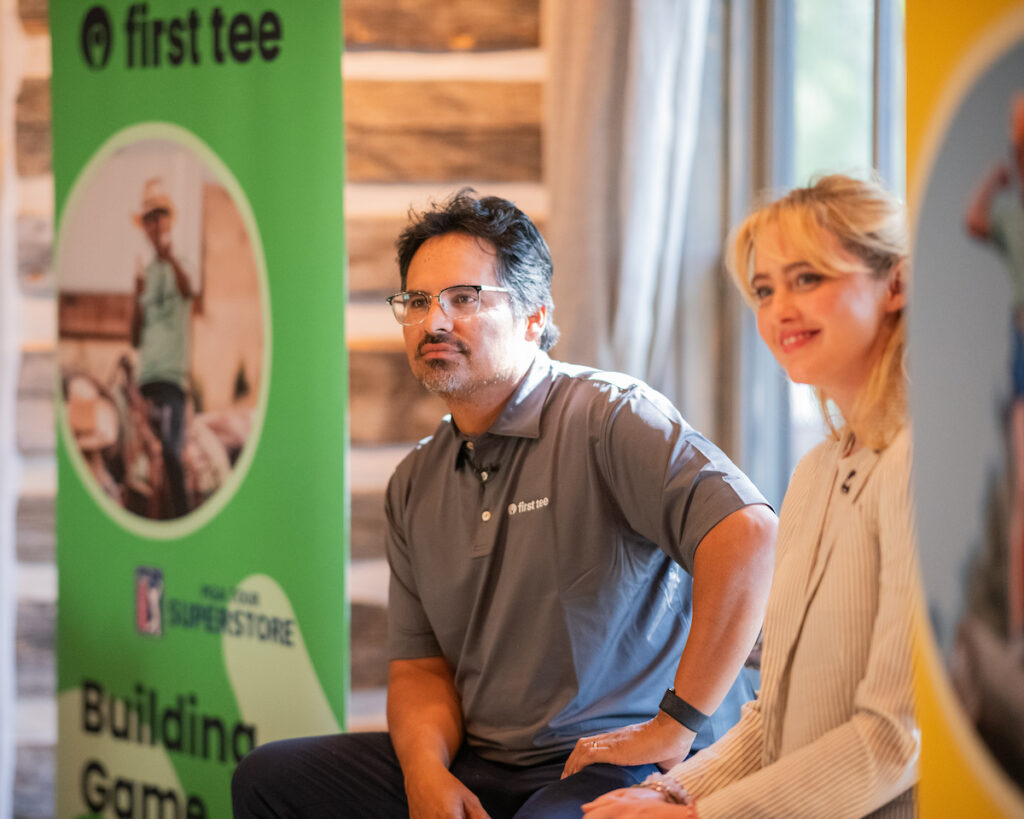
PONTE VEDRA BEACH, Fla. (Feb. 20, 2026) – Youth development organization First Tee is proud to announce that actor Michael Peña has joined the organization as a Brand Ambassador. As a longtime golfer, Peña is enthusiastic about bringing the sport and its inherent values to families across the globe.
Known for roles in films and television series including “Ant-Man,” “A Million Miles Away” and the recent hit series, “All Her Fault,” Peña has been a dedicated supporter of First Tee since 2023, when he first attended the organization’s annual Leadership Summit as a guest speaker. The Summit brings together teen participants from First Tee chapters across the country for leadership development, networking and golf.
As a Brand Ambassador, Peña will support First Tee’s efforts to reach kids from all communities with programming that uses golf as a vehicle to help young people build inner strength, self-confidence and resilience. Through First Tee’s network of 150 chapters, the organization serves young people ages 5-18 with programs that extend beyond the golf course and into participants’ homes, schools and communities. First Tee also offers robust scholarship and alumni programs.
An accomplished golfer himself, Peña regularly competes in pro-am events and has witnessed firsthand how the game can positively impact its players.
“Golf has been an important part of my life, teaching me patience, discipline and how to handle both success and failure,” Peña said. “I’m honored to become a Brand Ambassador and help First Tee reach even more young people with programs that will help them succeed on the golf course and beyond.”
“Michael’s genuine passion for golf and his commitment to empowering young people make him an ideal Brand Ambassador as we work to reach more kids with our life-changing programs,” said First Tee CEO Greg McLaughlin. “Michael has inspired teens at our Leadership Summit with his authenticity and his message about the power of perseverance. We are grateful he is taking his valuable time and energy to support First Tee.”
First Tee reaches more than 3 million young people annually through programming at chapters, schools and community centers. Peña joins three existing First Tee Brand Ambassadors: Actress and First Tee alumna Kathryn Newton and PGA TOUR players Alex Smalley and Austin Smotherman, who is also a First Tee alumnus.
If you’ve ever worried about signing your child up for a new activity because they might be “behind” other kids, you’re not alone. It’s a common concern among parents, and one we hear when families are considering First Tee programs.
Here’s what we want you to know: At First Tee, we’ve designed our approach so that every participant can learn, grow and have fun, regardless of where they start.
We’ve found kids and teens genuinely enjoy being around their peers. That’s why most First Tee Chapters offer age-based programming, rather than grouping kids by skill level. This allows players to connect, laugh and learn from each other in ways that transcend golf skills.
“First Tee coaches intentionally create optimal learning environments for participant success — fostering friendship, golf skill development and fun on the course,” said Lauren Kyaw, manager of First Tee’s coach program. “Through coaching strategies and coachable moments, coaches meet participants where they are and guide them toward mastery.”
But we also know that a 10-year-old who’s never held a golf club has different needs than a 10-year-old who plays regularly. That’s why our coaches take a thoughtful, individualized approach within each class.
How we make it work
At the start of each session, our coaches determine where each participant stands with their golf skills, not through an assessment but by observing their performance in fun games and drills. This isn’t about labeling anyone or creating pressure but about understanding how we can best support each player’s journey.
From there, we use several strategies to ensure everyone is appropriately challenged and engaged:
Personal Par is one of our favorite concepts. Instead of holding everyone to the same standard, we encourage each player to set their own goals for activities. A beginner might aim to make contact with the ball three times in a row, while a more advanced player might work on hitting a specific target. Both students are working hard, both are achieving something meaningful and both are experiencing success.
Flexible grouping means that while the class stays together as a unit, we’ll group players by skill level when introducing more complex techniques. At the same time, we intentionally pair advanced players with beginners during team challenges. This builds camaraderie across skill levels and allows everyone to contribute their strengths.
Optimal challenge ensures that activities cater to multiple skill levels. Every student faces appropriate challenges … not too easy, not too frustrating, but just right for where they are in their development.
The power of peer mentorship
Here’s something special that happens when you mix skill levels: advanced players become natural leaders and mentors. We’ve seen countless students light up when given the opportunity to help a classmate or demonstrate a skill. This doesn’t just reinforce their own learning, it builds confidence, empathy and leadership abilities that extend far beyond the golf course.
Many chapters also offer teen activities where golf isn’t the focus. From opportunities to build leadership skills, like teen advisory boards, to social events, like movie nights, bowling and other outings, these activities allow players of all skill levels to interact and build friendships off the course.
Coaching that adapts to each student
Our coaches understand that feedback isn’t one-size-fits-all. A student who’s just starting out might need encouragement and simple adjustments, while a more experienced player might benefit from more technical guidance. Our coaches modify their feedback to fit each player’s needs and learning style, ensuring that everyone receives the support that will help them improve.
Your child doesn’t need to know anything about golf to thrive in a First Tee program. They don’t need to be naturally athletic or have prior experience. They just need to show up ready to try, to learn and to be part of a community that values growth over perfection.
“Regardless of participants’ golf skill level, coaches bridge activities back to everyday life, helping youth overcome challenges, set goals and deal with adversity,” Kyaw said. “This ties back to First Tee’s mission and purpose: empowering participants to build character and instill life-enhancing values through golf, values they will carry far beyond the course.”
If you’re wondering when your child is ready to start playing golf, you’re asking the right question. The good news? There’s no single “perfect” age to begin, but there are some helpful guidelines.
Most First Tee chapters offer age-based programming – typically starting with 7–9-year-olds – so participants play alongside their peers, who are usually at similar stages of development in terms of attention span, strength and hand-eye coordination. That said, younger children can certainly be introduced to golf, and some First Tee chapters do this in playful, age-appropriate ways.
It’s about more than the swing
At First Tee, we’ve seen firsthand that starting golf isn’t just about learning to hit a ball: It’s about what the game teaches you along the way. Through golf, kids develop perseverance when a shot doesn’t go as planned, integrity when keeping score and respect for others sharing the course. These character-building moments happen whether your child picks up golf at 7 or 17.
Our programs are designed to meet kids where they are developmentally, focusing on fun, skill-building and life skills education.
Rather than focusing solely on age, consider whether your child:
Shows interest in the game (maybe they’ve watched golf on TV or asked about it)
Can follow basic instructions
Enjoys outdoor activities and trying new things
Is ready to practice patience — golf rewards persistence, not perfection
Starting Points Beyond Age
The right time also depends on the environment you’re introducing them to. Programs like First Tee emphasize inclusivity, character development and creating a welcoming space for beginners. This supportive atmosphere can make all the difference, regardless of when your child starts.
If your child is older and just discovering golf, that’s perfectly fine too. We’ve seen teenagers find their passion for the game and develop the same valuable life skills as those who started younger. Golf is a lifelong sport, and there’s truly no age when it’s “too late” to begin.
Find a First Tee chapter near you and give your child the opportunity to experience the game that teaches so much more than golf.
Signature programs bring young people face-to-face with business leaders, professional athletes and life-changing opportunities
PONTE VEDRA BEACH, Fla. (Jan. 26, 2026) – First Tee is pleased to announce its 2026 lineup of national participant events, offering teens powerful opportunities to grow as leaders, athletes and changemakers. Through partnerships with leading companies, organizations and generous individuals, First Tee provides experiences that challenge young people to step outside their comfort zones and discover their potential in supportive environments.
These national events are part of First Tee’s broader commitment to keeping teens actively engaged during the critical adolescent years, a need underscored by research from First Tee and The Harris Poll showing that nearly 90% of parents believe character development deserves greater emphasis in today’s society. Through First Tee’s Ace capstone program, junior coach opportunities and immersive national events, First Tee builds essential life skills and creates lasting mentor connections that help teens navigate this pivotal stage of development.
2026 Participant Events include:
Leadership Series (March 2026): In partnership with PGA TOUR Superstore, this five-week program guides participants through discovering their unique leadership values and strengths. It is held at PGA TOUR Superstore locations across the country.
National Championship (June 21-25, 2026): The University of North Carolina’s Finley Golf Club will host First Tee’s top high school golfers as they demonstrate their character and competitive skills developed through the program.
Game Changers Academy (July 18-22, 2026): Now in its 26th year, this signature event returns to Minneapolis, challenging teens to celebrate their unique perspectives and create positive change in their communities.
Leadership Summit (Aug. 3-7 and 10-14, 2026): Leadership Series graduates can apply for this adventure-based learning experience at West Creek Ranch in Montana, where PGA TOUR Superstore executives mentor participants through activities like horseback riding and whitewater rafting, designed to strengthen their leadership capabilities.
PURE Insurance Championship (September 15-20, 2026): At the iconic Pebble Beach Golf Links, teens compete alongside PGA TOUR Champions players and connect with business leaders in an event broadcast on Golf Channel, blending elite golf with career mentorship.
Drive Your Future Academy (Oct. 8-12, 2026): In partnership with John Deere, this event brings young women to Ponte Vedra Beach, Florida, to connect with accomplished female mentors from John Deere and other leading organizations and explore pathways for continued involvement in golf and leadership beyond high school.
Innovators Forum (Nov. 15-19, 2026): Participants collaborate with seasoned business and nonprofit leaders in Amelia Island, Florida, to design and launch community service initiatives that make a difference in their hometowns.
First Tee participant events provide opportunities for teens to pursue their interests, expand their horizons and grow as people. For some, these events represent their first time on an airplane, visiting a college campus or traveling on their own. This freedom gives teens the opportunity to use good judgment, grow through challenge and build positive self-identity.
“These events represent some of the most meaningful moments in our participants’ First Tee journey,” said First Tee CEO Greg McLaughlin. “We consistently hear from teens, parents and coaches that these experiences help crystallize what is possible for their futures. We are deeply grateful to AWS, John Deere, PGA TOUR Superstore, PURE Insurance, Topgolf and countless individual supporters who invest in these life-changing opportunities.”
First Tee is a nonprofit youth development organization that empowers young people through the game of golf, helping them develop inner strength, confidence and life skills they’ll use on and off the course.